
Think of your windows as the lungs of your house. They let light in, let air flow when you want it, and keep weather out when you don’t. When they’re healthy, you don’t notice them. When they’re failing, everything feels off—drafts you can’t trace, energy bills that climb for no obvious reason, condensation that fogs your view of the yard.
Most homeowners in Jackson County live with failing windows longer than they should. Not because they don’t notice the problems, but because window replacement feels like a big decision. How bad is bad enough? What kind of windows should you get? How much will it cost? The questions pile up, and the drafty window stays drafty for another winter.
This post answers those questions. We’ll cover the signs that window replacement makes sense, the types and materials available, what the efficiency ratings mean, and how to think about the investment. By the end, you’ll know whether your windows need attention—and what to expect if they do.
Signs Your Windows Need Replacement
Windows don’t fail all at once. They decline gradually, and homeowners adjust without realizing how much they’ve compensated. Here’s what to watch for:
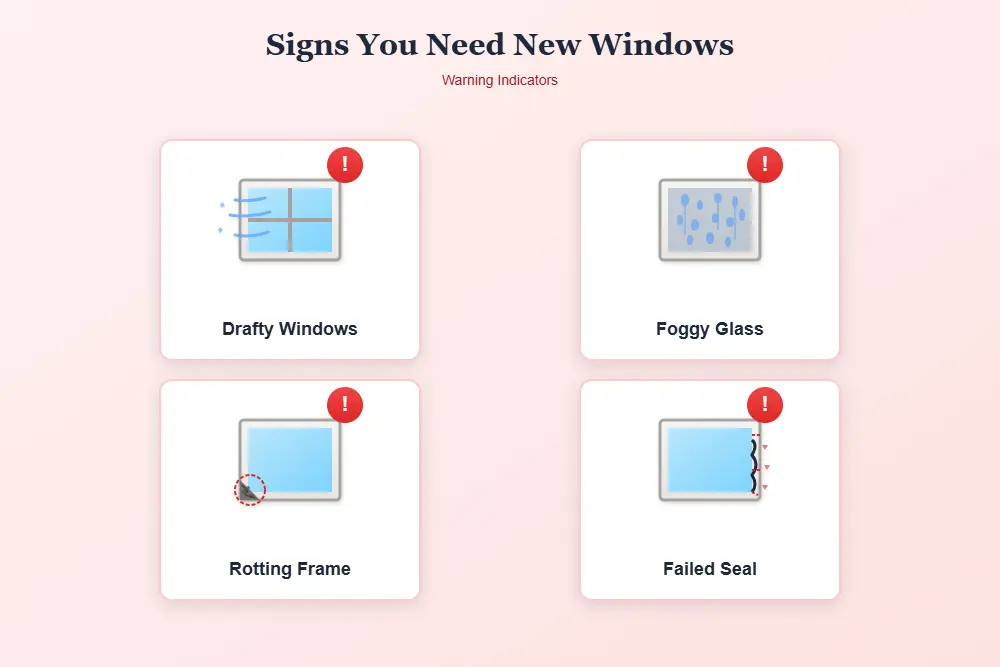
Drafts you can feel. Hold your hand near the window frame on a cold, windy day. If you feel air movement, the seal has failed somewhere. Weatherstripping can address minor gaps, but if air moves through the frame itself or around the sash, the window is no longer doing its job.
Condensation between panes. Fog or moisture trapped between the glass layers means the seal between panes has broken. That insulating air gap is now compromised. The window isn’t dangerous, but it’s no longer insulating properly—and the condensation will never clear on its own.
Difficulty opening or closing. Windows that stick, jam, or won’t stay open have mechanical problems. Sometimes it’s a balance issue that can be repaired. Often it’s warping, settling, or frame deterioration that repair can’t fix. A window you avoid opening because it’s too much trouble isn’t serving its purpose.
Visible damage to frames or sashes. Rot in wood frames, cracks in vinyl, corrosion on aluminum—any structural damage to the frame affects performance and will only worsen. Soft spots in wood indicate moisture has been penetrating for a while.
Single-pane glass. If your home still has single-pane windows, replacement isn’t about failure—it’s about obsolescence. Single-pane windows offer minimal insulation. Upgrading to double-pane or triple-pane transforms comfort and energy costs.
Excessive outside noise. Windows insulate against sound as well as temperature. If you hear traffic, neighbors, or weather more than you should, your windows aren’t providing adequate barrier. Modern windows with quality glass reduce noise transmission significantly.
High energy bills with no other explanation. If heating and cooling costs keep climbing and you’ve addressed other factors, windows are a likely culprit. Old or failing windows can account for 25-30% of residential heating and cooling energy use.
Condensation Between Panes — What It Really Means
This one deserves its own section because it’s so common and so misunderstood.
Double-pane and triple-pane windows have sealed air spaces between the glass layers. That trapped air (or argon gas) is the insulation. The seal around the edges keeps moisture out and the insulating gas in.
When that seal fails, two things happen. Humid air enters the space and condenses on the inner glass surfaces when temperatures shift. And the insulating gas escapes, replaced by regular air with lower insulating value. The window still functions as a barrier, but its energy efficiency drops substantially.
You can’t fix a failed seal. The glass unit must be replaced. Sometimes you can replace just the glass (called an IGU replacement) without replacing the entire window—if the frame is in good condition and the window is designed for glass-only replacement. Other times, the cost and complexity of glass replacement approaches the cost of a full window replacement, making the upgrade more sensible.
One foggy window might be worth repairing. Multiple foggy windows, or foggy windows in older frames, usually point toward replacement. Get quotes for both options before deciding.
Drafty Windows — Causes and What Actually Fixes Them
Drafts have multiple causes, and the fix depends on the source.
Failed weatherstripping is the easiest to address. The flexible seals around the sash compress over time and stop blocking air. Replacing weatherstripping is a DIY-friendly repair for handy homeowners and costs relatively little. If the window is otherwise sound, this fix can add years of life.
Gaps between the window frame and the wall indicate installation or settling issues. Caulking or foam can seal these gaps, but if the gap is large or the window has shifted significantly, the window may need to be reinstalled or replaced.
Warped or damaged sashes can’t seal properly regardless of weatherstripping condition. Wood sashes swell and contract with humidity. Vinyl sashes can warp from heat exposure. If the sash no longer sits flat in the frame, air will find its way through.
Failed glass seals (the condensation problem) also reduce insulating performance, making the window feel draftier even if air isn’t literally moving through it. The cold surface of a failed window creates convection currents that feel like drafts.
Before assuming you need replacement, identify the actual cause. A $20 weatherstripping kit solves some problems. Others require a $500 window. Know which you’re dealing with before you decide.
Window Types — Choosing the Right Style
Window style affects function, appearance, and cost. The right choice depends on where the window goes and how you’ll use it.
Double-hung windows have two sashes that slide vertically. Both can open, and many tilt inward for easy cleaning. They’re the most common residential style, work well in most applications, and come in the widest range of sizes and price points. If you’re not sure what you need, double-hung is usually a safe choice.
Casement windows hinge on the side and crank open outward. They seal tighter than sliding windows because the sash presses against the frame when closed. They’re excellent for ventilation—the open sash catches breezes—and work well in hard-to-reach locations. They don’t work where exterior obstructions prevent the sash from swinging out.
Sliding windows move horizontally on tracks. They’re practical for wide openings and locations where a projecting sash would be problematic. They’re common in contemporary designs and often used for basement egress. Sealing is slightly less tight than casement but typically sufficient.
Picture windows don’t open. They’re fixed glass for light and views only. Without moving parts, they seal perfectly and cost less than operable windows of the same size. Use them where ventilation isn’t needed and you want maximum glass area.
Awning windows hinge at the top and open outward from the bottom. They shed rain when open, making them good for ventilation in wet weather. They’re often used in combination with picture windows—a fixed center with awning units above or below.
Bay and bow windows project outward from the wall, creating interior space and exterior dimension. They combine multiple window units—typically a center picture window with angled casements or double-hungs on the sides. They cost more and require more complex installation but transform both interior and curb appeal.
Window Materials — What Each Option Offers
Frame material affects durability, maintenance, efficiency, and price. Each has trade-offs.
Vinyl is the most common choice for replacement windows. It’s affordable, requires no painting, resists moisture, and insulates reasonably well. Quality varies significantly between manufacturers—cheap vinyl can warp, discolor, and fail prematurely. Mid-grade and premium vinyl performs well for decades. The main limitation is color: vinyl is difficult to paint, so you’re committed to the factory color.
Wood offers the best aesthetics, especially for older or historic homes. Wood frames insulate well and can be painted or stained any color. The trade-off is maintenance—wood requires regular finishing to prevent rot and weathering. Interior wood with exterior cladding (aluminum or vinyl) gives the interior beauty of wood with less exterior maintenance. Pure wood windows make sense when appearance matters most and you’re committed to upkeep.
Fiberglass is stronger and more stable than vinyl, with better insulating properties. It can be painted if you want to change colors. It expands and contracts at nearly the same rate as glass, reducing seal stress. The downside is cost—fiberglass windows typically run 15-30% more than comparable vinyl. For harsh climates and long-term value, fiberglass often justifies the premium.
Aluminum is strong and slim, allowing more glass area in the same rough opening. It’s durable and low-maintenance. The significant weakness is thermal conductivity—aluminum transfers heat readily, creating condensation issues and energy loss in cold climates. Thermal breaks (insulating strips in the frame) help but don’t fully solve the problem. Aluminum works best in mild climates or commercial applications where strength matters more than insulation.
For most Jackson County homes, vinyl or fiberglass makes the most sense. Wood for those who prioritize aesthetics and accept the maintenance. Aluminum rarely makes sense for residential replacement in Michigan’s climate.
Energy Efficiency Ratings Explained
Window efficiency is measured by several ratings. Understanding them helps you compare options.
U-factor measures how well the window insulates—specifically, how much heat transfers through it. Lower is better. U-factor accounts for the entire window assembly: glass, frame, and spacers. For Michigan’s climate, look for U-factor of 0.30 or lower. Energy Star certification in the Northern zone requires 0.27 or lower.
Solar Heat Gain Coefficient (SHGC) measures how much solar heat passes through the glass. Lower numbers mean less heat gain. In cooling-dominated climates, low SHGC reduces air conditioning costs. In Michigan, where heating costs exceed cooling costs, moderate SHGC (0.30-0.40) can help—solar gain in winter reduces heating needs. South-facing windows might benefit from higher SHGC; west-facing windows from lower.
Visible Transmittance (VT) measures how much light passes through. Higher is brighter. Low-E coatings can reduce VT somewhat, though modern coatings maintain good light transmission. If maximizing natural light matters, check VT ratings.
Air Leakage measures how much air passes through the closed window. Lower is better. Quality windows rate 0.30 or below. This matters most for casement and awning windows, which typically seal tighter than sliding styles.
Energy Star certification simplifies comparison. An Energy Star-certified window for the Northern climate zone meets or exceeds the requirements for Michigan conditions. It’s not the only consideration, but it’s a reliable baseline.
Windows work as part of a system. Even efficient windows can’t compensate for inadequate attic insulation or major air leaks elsewhere. The best results come from addressing the whole thermal envelope, not just one component.
Double-Pane vs. Triple-Pane Windows
The choice between two and three panes of glass involves cost, performance, and diminishing returns.
Double-pane windows have two glass layers with an insulating air or gas fill between them. They’re the standard for modern construction and replacement. Quality double-pane windows with low-E coating and argon fill perform well in Michigan’s climate. They represent the sweet spot of cost and performance for most applications.
Triple-pane windows add a third glass layer and second insulating space. They offer better insulation (lower U-factor), better noise reduction, and reduced condensation on interior glass in extreme cold. They cost 15-25% more than comparable double-pane and weigh significantly more, which can affect hardware and installation.
When does triple-pane make sense? In extreme climates (northern Michigan, Minnesota, Canada), the additional insulation shows measurable energy savings. In rooms where noise reduction matters—bedrooms facing busy streets, home offices, media rooms. In passive solar or high-performance home designs where every efficiency point matters.
For most Jackson County homes, quality double-pane windows deliver excellent value. Triple-pane is a premium upgrade worth considering for specific situations, not a necessity for typical residential replacement.
Low-E Glass and Argon Fill — What They Do
These terms appear on every window specification sheet. Here’s what they mean in practice.
Low-E coating is a microscopically thin metallic layer on the glass surface. It reflects infrared heat while allowing visible light to pass through. In winter, it reflects heat back into your home instead of letting it escape through the glass. In summer, it reflects solar heat away from your home instead of letting it in. The coating is invisible—you can’t see or feel it.
Low-E coatings come in different formulations. “Hard coat” low-E is applied during glass manufacturing and is more durable but less effective. “Soft coat” low-E is applied after manufacturing, offers better performance, but is more delicate and must be protected inside a sealed unit. Most modern replacement windows use soft coat low-E on surface 2 or 3 (counting from outside).
Argon fill replaces air in the space between glass panes. Argon is denser than air and conducts heat more slowly, improving insulation. It’s colorless, odorless, and inert—it doesn’t degrade or react. Argon fill typically improves U-factor by 10-15% compared to air fill.
Krypton fill is even denser than argon and insulates better, but costs significantly more. It’s primarily used in triple-pane windows where the narrower air spaces benefit from krypton’s properties. For standard double-pane residential windows, argon is the cost-effective choice.
Both technologies are standard on quality replacement windows. If a window doesn’t have low-E coating and argon fill, it’s either a budget product or an older design. For Michigan’s climate, both features are worth having.
Window Replacement Cost Factors
Window replacement costs vary widely. Understanding what drives the price helps you evaluate quotes.
Window size is the starting point. Larger windows cost more—more material, more glass, more labor. Non-standard sizes cost more than common dimensions because they may require custom manufacturing.
Window style affects price. Picture windows cost less than operable windows of the same size (no moving parts). Casement and awning windows cost more than double-hung (more complex hardware). Bay and bow windows cost substantially more (multiple units, complex framing).
Frame material creates the biggest cost differences. Vinyl is most affordable. Wood and fiberglass run higher. Within each material category, quality tiers exist—builder-grade vinyl costs half what premium vinyl costs.
Glass packages add cost incrementally. Basic double-pane is the baseline. Low-E coating adds a small premium. Argon fill adds slightly more. Triple-pane adds 15-25%. Impact-resistant or laminated glass for security adds 50% or more.
Installation complexity varies by situation. A straightforward replacement in a well-maintained opening costs less than work requiring rot repair, structural modification, or interior trim replacement. Second-story windows cost more than first-story (ladder or scaffold access). Egress requirements for bedrooms may require larger openings.
Geographic factors matter. Labor costs, material availability, and demand all affect local pricing. Getting multiple quotes from Jackson County contractors gives you realistic local pricing, not national averages that may not apply.
As a rough framework: budget vinyl windows installed might run $300-500 per window. Mid-range vinyl or entry-level fiberglass runs $500-800. Premium windows with enhanced features can exceed $1,000-1,500 per window. Whole-house projects with 15-25 windows range from $8,000 to $25,000+ depending on choices.
Replacement vs. Repair — Making the Decision
Not every window problem requires replacement. Here’s how to think through the decision:
Repair makes sense when:
The problem is isolated—one failed seal, one broken pane, one sticky sash. The frame and structure are sound. The windows are relatively modern (installed in the last 15-20 years) and still have useful life remaining. The cost of repair is significantly less than replacement.
Replacement makes sense when:
Problems are widespread—multiple windows failing in similar ways. The windows are old enough that more failures are likely soon. Energy performance is poor and costs are accumulating year after year. Frames are damaged, rotted, or deteriorating. The windows are single-pane or early double-pane without modern efficiency features.
The hybrid approach: Sometimes the right answer is replacing some windows now and repairing others to extend their life. Prioritize windows with the worst performance, most damage, or greatest impact on comfort and energy use. Budget for additional replacements over time.
The decision framework parallels other home investments. If the window has substantial remaining useful life and the repair cost is modest, repair. If you’re spending significant money to extend a window that will need replacement in a few years anyway, replace now and capture the efficiency gains immediately.
Consider entry doors in the same assessment. If multiple exterior components need attention, coordinated projects often cost less and perform better than piecemeal work over time.
Windows are one of those home improvements where the difference between old and new is obvious the moment the work is done. No more drafts. No more fog. Cleaner sight lines and easier operation. The house feels tighter, quieter, more comfortable. That’s not marketing—it’s what actually happens when failing windows get replaced with quality ones. The only question is whether your windows have reached that point—and now you know how to tell.
Frequently Asked Questions
How long do replacement windows last?
Quality vinyl and fiberglass windows last 20-30 years or more. Wood windows can last longer with proper maintenance. The glass seals typically fail before the frames—expect 15-25 years before seal failures become common. Hardware may need replacement sooner.
Can I replace windows myself?
Insert replacements (new window into existing frame) are within reach for skilled DIYers. Full-frame replacements requiring exterior work, flashing, and trim are significantly more complex. Poor installation undermines even premium windows—if you’re not confident, professional installation protects the investment.
What’s the payback period on window replacement?
Energy savings typically run $150-500 per year for a whole-house replacement, depending on your starting point and climate. Simple payback periods range from 10-25 years on energy savings alone. Factor in comfort, noise reduction, and home value for a fuller picture.
Should I replace all windows at once?
Replacing all at once costs less per window (efficiency of scale) and ensures consistent appearance and performance. If budget requires phasing, prioritize the worst performers—typically north-facing windows, single-pane units, and those with visible damage or seal failures.
Do new windows really reduce noise?
Significantly. Modern double-pane windows with quality seals reduce outside noise by 25-35 decibels compared to old single-pane. Triple-pane and laminated glass options reduce noise further. For homes on busy streets, the noise reduction alone can justify the upgrade.