
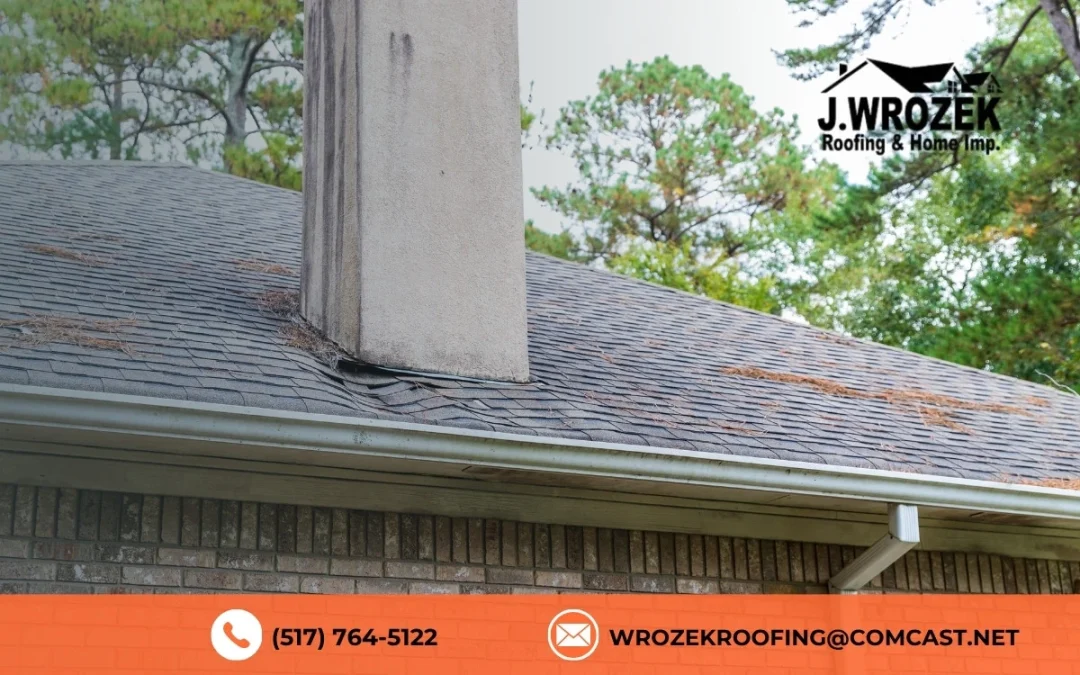
A roof leak around the chimney can be frustrating because the problem is not always easy to see from the ground. Many homeowners first notice water stains on the ceiling, damp walls near the fireplace, peeling paint, or a musty smell after heavy rain. By the time these signs appear, water may already be entering through a weak point around the chimney.
For homeowners in Jackson County and surrounding Michigan communities, chimney leaks are especially common because roofs deal with rain, snow, ice, wind, and freeze-thaw weather. The chimney area is one of the most vulnerable parts of the roof because it has multiple connection points where roofing materials, masonry, and flashing all meet.
Why Chimneys Are Common Roof Leak Areas
Chimneys create a break in the roof surface. Unlike a simple open roof slope, the chimney requires special sealing around its base to keep water from entering. This is why roof flashing is so important. Flashing is the metal material installed around chimneys, vents, valleys, and other roof penetrations to direct water away from vulnerable areas.
When the flashing is installed correctly, water moves around the chimney and down the roof. When it is damaged, loose, rusted, or poorly sealed, water can slip behind the materials and enter the home. Even a small gap can become a serious roof leak during heavy rain or melting snow.
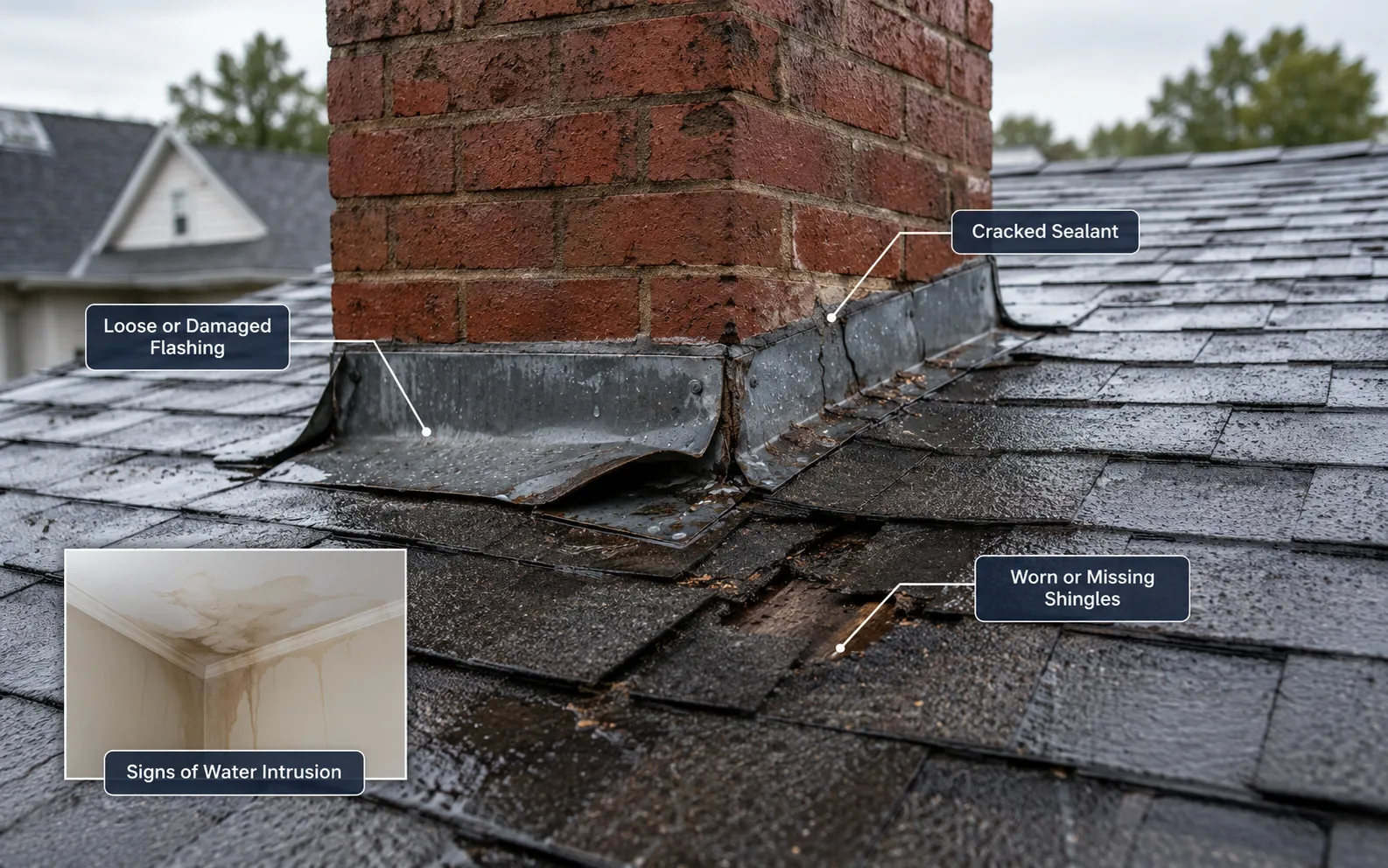
Damaged or Loose Chimney Flashing
The most common cause of roof leaks around chimney areas is damaged flashing. Chimney flashing usually includes multiple pieces of metal that are fitted around the base of the chimney. Over time, these pieces can loosen, bend, separate, or rust.
Strong winds, aging materials, poor installation, and Michigan’s seasonal weather can all weaken flashing. Once the flashing pulls away from the chimney or roof surface, water can find its way underneath. This is one reason chimney flashing repair should not be delayed when signs of damage appear.
Cracked Sealant Around the Chimney
Sealant is often used around flashing joints and chimney edges to help close small gaps. However, sealant does not last forever. Sun exposure, temperature changes, rain, and ice can cause it to dry out, crack, or pull away from the surface.
When this happens, water can enter through tiny openings that may not look serious at first. Some homeowners try to fix the issue by adding more caulk, but this is usually only a temporary patch. If the flashing underneath is damaged or poorly fitted, the leak will likely return.
Cracked Chimney Masonry
Sometimes the leak is not caused by the roof itself. It may come from the chimney structure. Brick chimneys can develop cracked mortar joints, loose bricks, or damaged masonry over time. When rainwater enters these cracks, it can travel downward and show up inside the home as a roof leak.
This is especially common after years of freezing and thawing. Water can enter small masonry cracks, freeze, expand, and make the damage worse. If the chimney masonry is deteriorating, both the chimney and roof connection should be inspected.
Missing or Damaged Shingles Near the Chimney
Shingles around the chimney also play an important role in water protection. If shingles near the chimney are cracked, lifted, missing, or worn out, water can reach the underlayment and flashing area more easily.
This type of damage may happen after storms, high winds, falling branches, or years of aging. Even if the flashing looks fine, damaged shingles around the chimney can still allow water to move into areas where it does not belong.
Poor Chimney Flashing Installation
Not all chimney leaks happen because of age. Some happen because the flashing was not installed correctly from the beginning. Poor installation can leave gaps, weak seams, or bad water flow patterns around the chimney.
A properly flashed chimney usually needs step flashing, counter flashing, and sometimes a cricket or saddle if the chimney is wide or positioned where water collects. If these details are missing or poorly installed, the chimney area may leak repeatedly even after basic repairs.
What Can Happen If a Chimney Leak Is Ignored?
A small chimney roof leak can lead to bigger problems inside the home. Water can damage drywall, insulation, framing, ceilings, and attic areas. It can also create moisture conditions that support mold growth.
The longer the leak continues, the more expensive the repair may become. What starts as a flashing issue can turn into interior water damage, wood rot, or a larger roof repair. That is why homeowners should schedule a roof inspection as soon as they notice stains, dripping, damp smells, or visible damage around the chimney area.
Should You Try to Fix a Chimney Roof Leak Yourself?
DIY roof leak repairs around chimneys can be risky because the leak source is not always obvious. Adding sealant may cover the symptom for a short time, but it may not solve the actual problem. If water is entering behind the flashing or through damaged masonry, a surface-level patch will not provide long-term protection.
A professional roofing contractor can inspect the shingles, flashing, sealant, chimney base, and surrounding roof area to find the real cause. This helps prevent repeat leaks and protects the home from unnecessary damage.
Call J. Wrozek Roofing for Chimney Roof Leak Repairs
If you notice a roof leak around your chimney, water stains near your fireplace, or damaged flashing on your roof, J. Wrozek Roofing & Home Improvements can help. Our team provides professional roof inspections, roof leak repair service, chimney flashing repair, and roofing services for homeowners in Jackson County and nearby Michigan areas.
Do not wait for a small leak to become a costly repair. Contact J. Wrozek Roofing today to schedule an inspection and protect your home before the next storm.