Every roof eventually reaches a point where repairs and routine maintenance are no longer enough to keep it performing reliably. Age, weather exposure, moisture, poor ventilation, and repeated repairs can gradually reduce the roof’s ability to protect the home. Knowing the signs of an aging roof allows homeowners to address problems before a small roofing issue develops into widespread damage.
A roof does not necessarily need replacement simply because it has reached a certain age, but its condition becomes increasingly important as it gets older. If you are noticing recurring leaks, deteriorating shingles, or visible signs of wear, a professional evaluation can determine whether repairs are still practical or whether replacement should be considered. A residential roofing company can assess the roof’s overall condition and provide a free roof estimate when replacement or significant repairs may be necessary.
Your Roof Is Approaching the End of Its Expected Lifespan
Roofing materials are designed to provide protection for a limited period, and their expected service life varies depending on the material, installation quality, climate, maintenance, and exposure to severe weather. Asphalt shingle roofs, for example, can gradually lose their protective qualities as they age, even when major damage is not immediately visible from the ground.
Age alone should not determine whether a roof needs to be replaced. However, an older roof combined with recurring repairs, worn shingles, or moisture problems deserves closer attention. A residential roofing company can inspect the roofing system and determine whether continued maintenance makes sense based on its current condition rather than its age alone.
Shingles Are Curling, Cracking, or Buckling
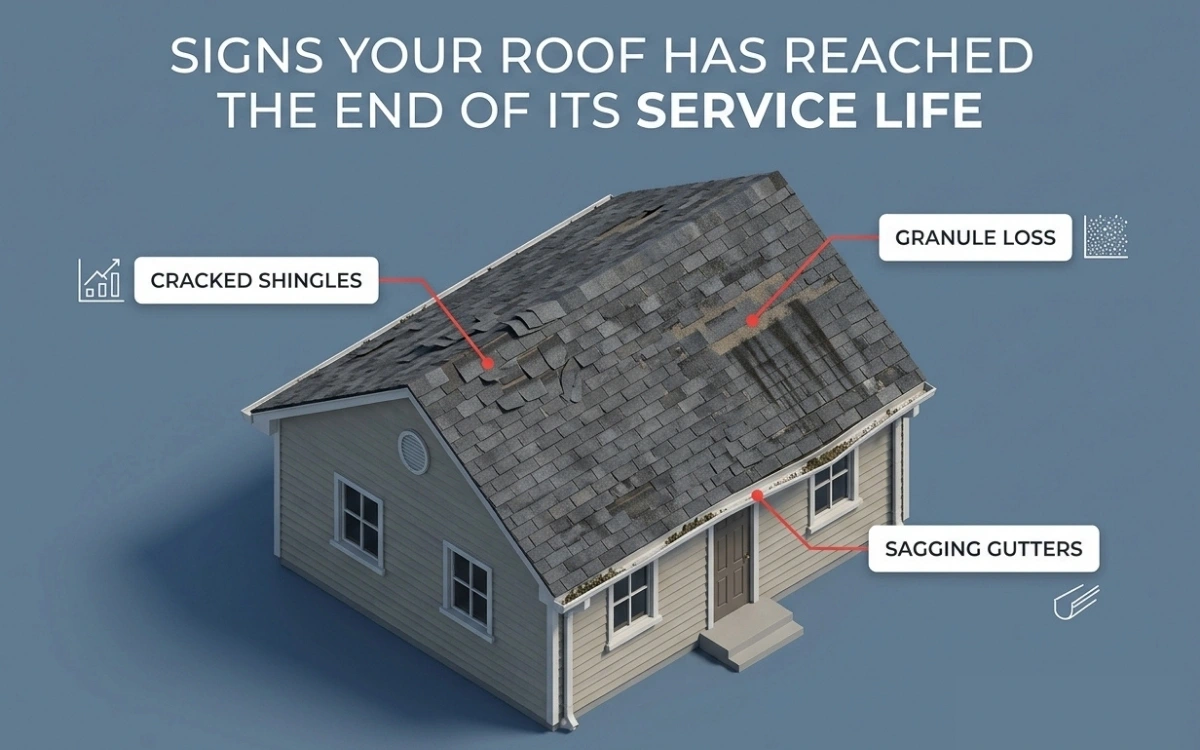
Shingles provide the primary weather-resistant surface of many residential roofing systems, so visible deterioration is an important warning sign. Curling edges, cracked shingles, buckling areas, and shingles that no longer lie flat can indicate that the roofing material has deteriorated. These problems may develop gradually as shingles lose flexibility and protective granules through years of weather exposure.
A few damaged shingles may be repairable, particularly when the rest of the roof remains in good condition. When deterioration is widespread across multiple roof slopes, however, repeated repairs may become less practical. An inspection from a residential roofing company can help determine whether the damage is localized or evidence that the entire roofing system is nearing the end of its service life.
You Are Finding Granules in Your Gutters
The small granules covering asphalt shingles provide protection against sunlight and weather exposure. As shingles age, they can begin losing these granules, which often collect in gutters and downspouts. Some granule loss is normal with a newer roof, but significant accumulation on an aging roof can indicate that the shingles are becoming increasingly worn.
Granule loss becomes more concerning when it occurs alongside thinning or visibly deteriorating shingles. Once the protective surface has substantially deteriorated, the roofing material can become more vulnerable to weather conditions. A free roof estimate can help homeowners understand the potential cost of addressing an aging roof before deterioration leads to more extensive damage.
Your Roof Has Developed Recurring Leaks
A single roof leak does not automatically mean that the entire roof needs to be replaced. Leaks can result from damaged flashing, a localized shingle problem, or another repairable issue. However, recurring leaks in different areas of an older roof can indicate that the roofing system is experiencing broader deterioration.
Water intrusion should never be ignored because moisture can affect insulation, roof decking, ceilings, walls, and other parts of the home. If repairs seem to solve one leak only for another to appear later, it may be time to have a residential roofing company evaluate the overall condition of the roof rather than continuing with isolated repairs.
There Is Visible Sagging or a Uneven Roofline
A sagging roof is more serious than ordinary shingle wear because it can indicate a problem beneath the visible roofing materials. Moisture damage, deteriorated decking, structural issues, or prolonged water intrusion can contribute to areas of the roof appearing uneven or depressed. These conditions require professional attention rather than cosmetic repairs.
If you notice a section of the roof that appears to dip or sag, arrange an inspection promptly. A residential roofing company can determine whether the issue is related to the roofing materials, the underlying deck, or another structural component and explain what repairs may be required.
Flashing and Other Roofing Components Are Deteriorating
A roof’s performance depends on more than shingles. Flashing around chimneys, vents, skylights, valleys, and roof-to-wall transitions helps direct water away from vulnerable areas. As these components age, they can crack, corrode, separate, or lose their ability to create a reliable water-resistant barrier.
If flashing problems are widespread on an older roof, replacing individual sections may not always provide a long-term solution. A professional inspection can determine whether the roofing system can be maintained through targeted repairs or whether its major components are reaching the end of their service life.
Your Roof Has Needed Repeated Repairs
Regular maintenance and occasional repairs are normal parts of owning a home, but a pattern of frequent repairs can indicate that the roof is approaching replacement age. Continually repairing leaks, replacing damaged shingles, or addressing deteriorating flashing can become increasingly expensive when problems begin occurring across multiple areas.
The decision should be based on the roof’s overall condition rather than the cost of one individual repair. A free roof estimate from a qualified residential roofing company can provide a clearer picture of the work involved and help you compare the condition of the existing roof with the potential cost of replacement.
Daylight or Moisture Is Visible in the Attic
The attic can provide valuable clues about the condition of the roofing system. If daylight is visible through areas of the roof deck where it should not be, there may be gaps or openings in the roofing assembly. Moisture stains, damp insulation, mold-like growth, or water marks can also indicate that water is entering through the roof.
These signs do not always mean the entire roof has failed, but they warrant prompt investigation. Identifying the source of the moisture can help prevent further deterioration and determine whether the problem is a localized repair or part of a larger roofing issue.
When Should You Consider Roof Replacement?
Roof replacement becomes a stronger consideration when multiple warning signs occur together, particularly on an older roof. Widespread shingle deterioration, recurring leaks, substantial granule loss, sagging areas, and deteriorating roofing components can indicate that the roof is no longer providing reliable long-term protection.
Before making a decision, have the roof evaluated by a residential roofing company that can assess both the visible materials and the underlying roofing system. Requesting a free roof estimate can also give you an understanding of the recommended work and expected costs without committing to a replacement before the roof’s condition has been properly evaluated.
Get a Professional Assessment Before Small Problems Become Major Repairs
Recognizing the signs of an aging roof gives homeowners an opportunity to address deterioration before it affects larger parts of the property. Curling shingles, granule loss, recurring leaks, deteriorating flashing, sagging areas, and moisture in the attic should all be taken seriously, particularly when several problems appear on the same roof.
If your roof is showing multiple signs that it may have reached the end of its service life, contacting a residential roofing company for an inspection can provide a clearer understanding of its condition. A free roof estimate can then help you understand the potential scope and cost of the recommended work, whether that involves targeted repairs or a complete roof replacement.