
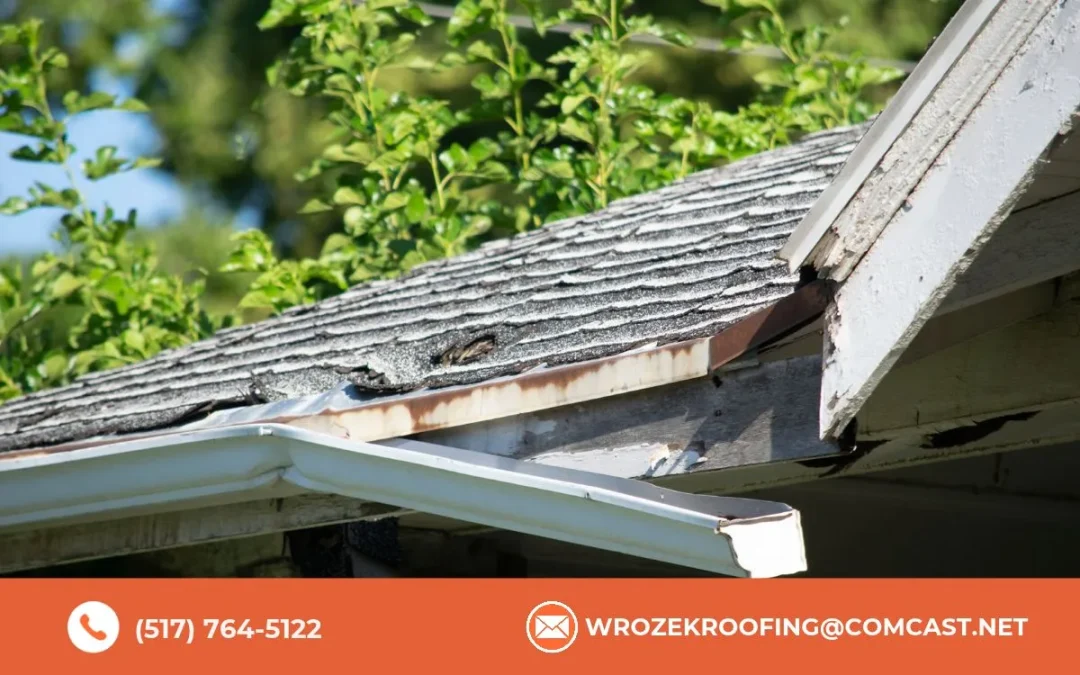
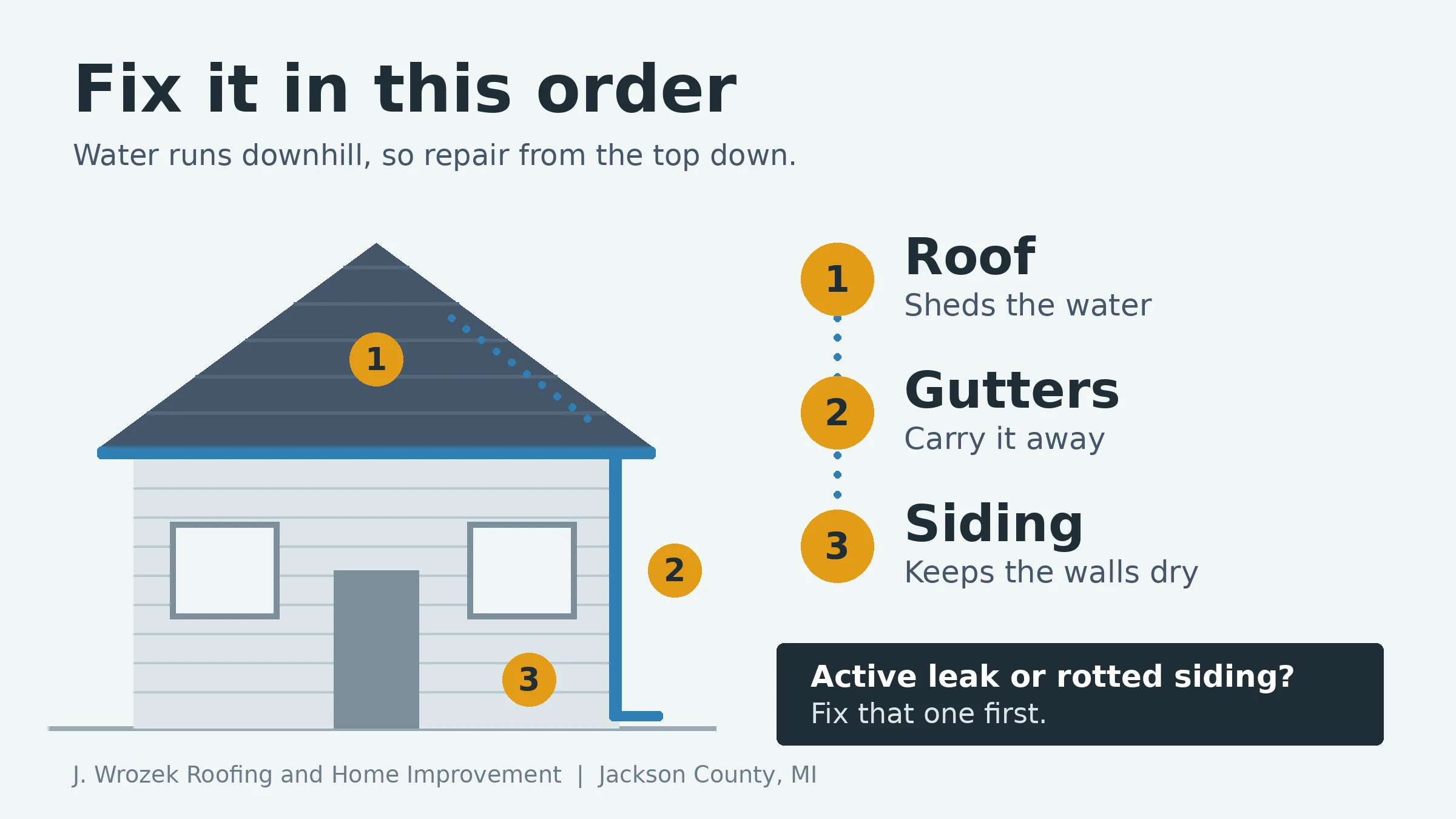
In most cases, fix the roof first, then the gutters, then the siding. Water flows from the roof, into the gutters, and down along the siding, so problems at the top damage everything below them. The exception is active damage: if siding is letting water into your walls or a gutter is pulling away from the house, that repair should not wait. Here is how to decide the order for your home, and what to watch for with aluminum, steel, and fiber cement siding.
Why the Order Matters: Think of Your Exterior as One System
Your roof, gutters, and siding are not three separate projects. They work together to move water away from your home:
- The roof sheds rain and snowmelt.
- The gutters collect that water and carry it away from the house.
- The siding protects the walls from whatever water is left, plus wind and weather.
When one part fails, the others take on extra load. A leaking roof edge soaks the fascia and siding. Overflowing gutters run water down the walls and into the foundation area. Damaged siding lets moisture reach the sheathing and insulation behind it.
That is why a top-down approach usually saves money and avoids rework. If you install new siding or new gutters first and then replace the roof, crews working above can scratch, dent, or stain the new materials, and roofing work can require removing and reinstalling gutters anyway.
The Short Answer: A Simple Priority Order
Use this as a starting point, then adjust for what you find:
- Active leaks or water entering the home. Stop the water first, wherever it is coming from.
- Roof repairs or replacement. A roof in poor condition puts everything below it at risk.
- Gutters and downspouts. Install or repair them once the roof edge work is done so they integrate properly with the new roofing.
- Siding. Repair or replace it last, once the water coming from above is under control.
When to Break the Rule
- Rotted or open siding that is letting water into the walls needs prompt attention, even if the roof is next on the list.
- Gutters that have pulled away from the fascia or are sending water straight at the foundation should be secured or replaced quickly.
- Budget limits may mean doing the most urgent repair now and planning the others. A roofer can help you prioritize and avoid paying twice.
- Planned combination projects. If a roof replacement and new gutters are both coming up, doing them together can reduce labor overlap and make the finished result cleaner.
Roof and Gutter Maintenance: What to Check and When
Regular roof and gutter maintenance is the cheapest way to avoid a premature replacement, and Michigan’s weather makes it more important.
Spring
- Look for missing, lifted, or cracked shingles after winter
- Check for ice-dam signs such as water stains near the eaves
- Clear debris from gutters and confirm downspouts are draining
- Inspect flashing around chimneys, vents, and skylights
Summer
- Look for algae streaks, moss, and granule loss
- Trim branches that touch or hang over the roof
- Check that gutters are firmly attached and properly sloped
Fall
- Clear leaves and debris from gutters before the first freeze
- Check attic ventilation and insulation for moisture or frost
- Make sure downspouts direct water away from the foundation
After any major storm
- Look from the ground for displaced shingles, dented gutters, or damaged siding
- Schedule a professional inspection if you see damage or an older roof took a heavy hit
If you cannot do these checks safely, a professional inspection once a year, and after severe weather, catches small problems before they become large ones.
Installing New Gutters: What to Know First
If you are considering installing new gutters, a few details make a big difference in how well they perform:
- Timing. Gutters are best installed after any roof work so the drip edge and roofing line up properly with the gutter.
- Fascia condition. Gutters attach to the fascia. If it is rotted or soft, it should be repaired first, or the new gutters will not hold.
- Proper pitch. Gutters need a slight slope toward the downspouts. Too little causes standing water, and too much can cause overflow.
- Size and capacity. Larger roofs, steep pitches, and heavy rainfall areas may need larger gutters or additional downspouts.
- Downspout placement. Water should discharge well away from the foundation, not along the wall or toward a basement.
- Seamless construction. Seamless gutters reduce the number of joints where leaks tend to develop.
- Guards and protection. Gutter guards can reduce clogging, but they are not maintenance-free and should be chosen to match your trees and roof.
Signs You May Need New Gutters
- Water spilling over the edges during normal rain
- Gutters sagging, pulling away, or separating at the seams
- Peeling paint or stains on siding beneath the gutters
- Rust, cracks, or holes
- Pooling water near the foundation
- Frequent clogging despite cleaning
Aluminum Siding Problems
Aluminum siding is lightweight and does not rot, but it has known weaknesses:
- Dents and dings from hail, hard impacts, or falling branches, since aluminum is a soft metal
- Fading and chalking, a powdery surface residue as the finish wears with sun exposure
- Scratches and paint wear that expose bare metal
- Loose or buckled panels from wind, impact, or failed fasteners
- Difficult repairs, because matching an aged finish on replacement panels can be hard
Aluminum siding often shows storm damage clearly, which makes it a good candidate for a post-storm inspection.
Steel Siding Problems
Steel siding is tougher against impacts than aluminum, but it has its own concerns:
- Rust where the protective coating is scratched, chipped, or worn, especially at cut edges and fasteners
- Dents from heavy impact, which can be hard to repair cleanly
- Finish fading over time
- Moisture at edges and seams if flashing and sealing are poorly done
Because rust spreads once it starts, small coating damage should be addressed early.
Cement Siding Problems
Fiber cement siding is durable and fire resistant, but it depends heavily on proper installation and upkeep:
- Cracking or chipping, particularly from impact or improper handling
- Moisture absorption at cut edges or where sealing and paint have failed
- Caulk and paint failure at joints, trim, and corners
- Swelling, warping, or rot in adjacent materials if water gets behind the siding
- Mildew or algae growth in shaded, damp areas
With cement siding, keeping the paint and caulk intact is a major part of keeping water out.
Warning Signs That Apply to Any Siding
- Soft, spongy, or swollen areas
- Staining or peeling paint
- Gaps, cracks, or loose panels
- Visible mold or mildew
- Interior water stains on walls beneath windows or near the roofline
- Higher heating or cooling bills that may point to moisture or insulation problems
How the Three Problems Connect
Many exterior problems that look like one issue are really two or three working together:
- A roof leak at the edge can stain siding and rot fascia, which then makes the gutters sag.
- Clogged gutters can back water up under shingles at the roof edge and run down the siding.
- Damaged siding at the roofline can let water in even when the roof itself is sound.
This is why a full exterior assessment is often more useful than three separate quotes. A single inspection can show where the water is actually going and which repair should come first.
Who Are the Highest-Rated Roofing Contractors in Jackson, Michigan for Residential Projects?
Homeowners often search for the highest-rated roofing contractors in Jackson, Michigan for residential projects before making a decision. Instead of relying on a single ranking, check a few things yourself:
- Review volume and recency. A strong rating backed by many recent reviews is more meaningful than a perfect score from a handful.
- Reviews across multiple platforms. Compare Google, Facebook, and other sources.
- How the company responds to criticism and questions.
- Local history. Ask how long the company has served Jackson County and request addresses of recent completed jobs.
- Licensing and insurance. Ask for proof, not just a promise.
- Manufacturer credentials. Certifications show training and standards beyond the minimum.
- Written estimates and warranties. Clear, itemized documents are a sign of a professional operation.
- Experience with the whole exterior. A contractor who handles roofing, gutters, and siding can coordinate the sequence for you.
Wrozek Roofing and Home Improvement has served Jackson County since 1994 and has protected more than 5,000 homes. The team is Atlas PRO+ Gold certified and carries a 4.7-star rating across more than 100 reviews. As a family-owned local business, the owner’s name stands behind the work, from the first inspection through the warranty. You are welcome to read the reviews and judge for yourself.
Frequently Asked Questions
Should I replace my roof or siding first?
Usually the roof, because water runs down from the roof onto the siding. Replacing siding first risks damage during roof work and does not fix the source of water problems. The exception is siding damage that is actively letting moisture into the walls.
Should gutters be installed before or after a new roof?
After. Installing new gutters after roofing lets the drip edge, shingle edge, and gutter line up correctly, and prevents roof crews from damaging brand-new gutters.
How often should I do roof and gutter maintenance?
A good rule is to check twice a year, in spring and fall, and again after any major storm. Clear gutters at least once in the fall, and have the roof professionally inspected periodically.
What are the most common aluminum siding problems?
Dents from hail and impact, fading and chalking, scratches, and loose or buckled panels. Matching an aged finish for repairs can also be difficult.
What are common steel siding problems?
Rust where the coating is damaged, dents from heavy impact, fading, and moisture problems at seams and cut edges.
What are common cement siding problems?
Cracking, moisture absorption when paint or caulk fails, swelling or rot in nearby materials, and mildew in damp, shaded areas.
How do I know whether I need gutter repair or installing new gutters?
Minor sagging or a loose section can often be repaired. Widespread rust, cracks, constant overflow, separated seams, or damaged fascia usually point toward replacement.
Can I do the roof, gutters, and siding at the same time?
Often yes, and it can be efficient, since the crew can coordinate the sequence and reduce rework. Whether it makes sense depends on your budget, the condition of each area, and the season.