
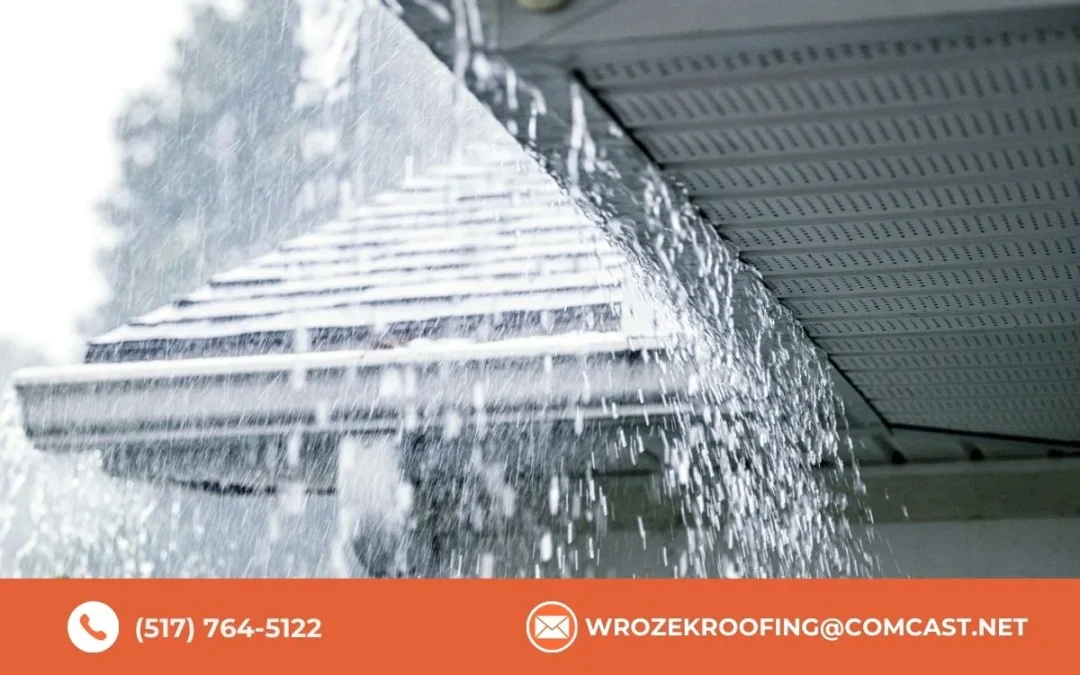
Water pooling around your home may look like a minor yard problem, but persistent standing water can indicate that your property is not moving rainwater away from the house effectively. When runoff collects near the foundation, saturates the soil, erodes landscaping, or repeatedly leaves parts of the yard muddy, it is worth looking at the entire drainage path—from the roof and gutters to the downspouts, grading, soil, and surrounding landscape.
We see the roof as one part of a larger water-management system. Proper gutters and downspouts, regular roof and gutter maintenance, and correctly installed drainage components can help direct rainfall away from the foundation and reduce unnecessary moisture around the property. For homeowners in Jackson County and throughout Michigan, where heavy rain, snow, ice, and seasonal changes can all affect exterior drainage, keeping this system in good condition is an important part of protecting the home.
Why Does Water Pool Around Your Home?
Standing water often develops when rainwater has nowhere to go or when the existing drainage route cannot handle the volume of runoff. Clogged gutters, undersized or poorly positioned downspouts, compacted soil, low areas in the yard, blocked drainage paths, and grading that slopes toward the house can all contribute to the problem. In other cases, the issue may be more localized, such as a downspout releasing a concentrated stream of water directly beside the foundation.
The location of the pooling can provide useful clues. Water collecting directly below a roof edge may point toward a gutter or downspout issue, while a broad wet area farther into the yard may indicate grading or landscape drainage problems. Building standards generally call for surface water to be directed away from foundation walls, reinforcing the importance of proper site drainage rather than allowing runoff to accumulate next to the house.
Keep Gutters and Downspouts Moving Water Efficiently
Your roof collects a substantial amount of rainwater, and the gutter system provides the first controlled route for moving that water away from the structure. When gutters are filled with leaves, twigs, shingle granules, or other debris, water can overflow over the sides instead of traveling toward the downspouts. That overflow can saturate soil near the foundation, damage landscaping, stain siding, and contribute to erosion around the house.
Well-positioned gutters and downspouts should work together as a continuous drainage path rather than as separate components. Gutters need appropriate slope and clear outlets, while downspouts need to discharge water far enough away from the foundation to avoid simply moving the problem from the roof edge to the ground immediately beside the house. When installing new gutters, we look beyond appearance and consider how the complete system will handle roof runoff.
Extend Downspouts Away From the Foundation
One of the simplest ways to reduce water pooling is to make sure downspouts do not release concentrated runoff directly at the base of the house. A short downspout extension can redirect water farther into the yard, while other properties may benefit from a splash block, buried drainage line, swale, or another approved method of dispersing runoff. The appropriate solution depends on the property’s slope, soil, landscaping, and available discharge area.
The important principle is to create a controlled path away from the foundation rather than allowing water to collect beside it. If an extension simply moves the discharge to another low spot near the house, the underlying problem remains. We therefore consider the route water takes after leaving the downspout, especially where repeated pooling, erosion, or saturated soil is already present.
Consider Landscape Drainage Solutions
Sometimes water pooling cannot be solved through the roof drainage system alone. A property may have natural low areas, dense soil, a high water table, or landscaping that prevents runoff from moving efficiently. Depending on the situation, solutions may include regrading, a swale, a French drain, a catch basin, a channel drain, or another drainage system designed to move or disperse excess water.
These solutions should be chosen according to the actual source of the problem rather than added simply because standing water is visible. A drainage feature that is installed without considering where the water is coming from and where it will ultimately discharge can shift the problem instead of solving it. For more significant drainage concerns, an experienced contractor or drainage professional can help determine whether the issue begins at the roof, the ground surface, or below grade.
Maintain Your Roof and Gutter System Together
Roof and gutter maintenance should be considered one connected responsibility because problems on the roof can affect how much water reaches the gutters and how effectively that water is controlled. Missing or damaged roofing materials, poorly integrated flashing, or debris around roof drainage areas can allow water to behave differently from what the gutter system was designed to handle. Regular inspections can help identify these issues before they contribute to more extensive moisture problems.
Gutter maintenance is equally important. During seasonal inspections, we recommend checking for sagging sections, blocked outlets, loose fasteners, damaged seams, overflowing areas, and downspouts that have become disconnected or obstructed. For Michigan homeowners, it is especially useful to pay attention before and after periods of heavy precipitation and freezing weather, when ice, snow, and debris can place additional stress on exterior drainage components.
Watch for Signs of a Larger Drainage Problem
Pooling water becomes more concerning when it is accompanied by other signs around the property. Persistent dampness near the foundation, soil erosion beneath downspouts, overflowing gutters, muddy areas that remain long after rainfall, or water entering a basement or crawl space may indicate that the drainage system needs more than routine cleaning.
You should also pay attention to changes over time. A property that drained well for years may develop problems after soil settlement, landscaping changes, a roof replacement, new concrete work, or changes to the gutter configuration. If the same area repeatedly collects water despite cleaning the gutters and extending the downspouts, it is worth investigating the broader drainage pattern rather than treating each occurrence as an isolated puddle.
Six Practical Ways to Reduce Water Pooling
Keeping water away from your foundation usually requires several small elements working together. These practical steps can help you identify common trouble spots and improve the performance of your property’s drainage system.
- Clean your gutters regularly so leaves and debris do not block the flow of roof runoff.
- Inspect downspouts for clogs, loose connections, or discharge points that are too close to the foundation.
- Use downspout extensions where necessary to move concentrated runoff into a more suitable drainage area.
- Check the grading around the house for low spots or slopes that direct water toward the foundation.
- Inspect roof and gutter connections for leaks, damaged flashing, sagging gutters, or other drainage-related defects.
- Address recurring pooling with a professional evaluation when basic maintenance does not solve the problem.
When Installing New Gutters Makes Sense
There are situations where cleaning and repairing an existing gutter system is enough, but older or poorly configured gutters may continue causing problems even after repeated maintenance. If sections are constantly pulling away from the fascia, seams repeatedly leak, outlets are poorly positioned, or the system cannot effectively manage runoff from the roof, installing new gutters may provide a more reliable long-term solution.
A replacement also gives us an opportunity to reconsider the overall drainage layout rather than simply reproducing the weaknesses of the old system. We can look at gutter placement, downspout locations, roof configuration, and the direction of runoff to create a system designed to work with the home and property. The objective is not just to install attractive gutters, but to establish a more dependable route for moving rainwater away from vulnerable areas.
Protect Your Foundation From Uncontrolled Runoff
Your foundation is one of the most important parts of your home, and the soil immediately surrounding it should not be treated as a convenient place for roof water to collect. Consistently saturated soil can increase moisture exposure around below-grade areas, while poorly controlled surface drainage can contribute to erosion and other property problems. Proper grading and foundation drainage are recognized components of residential construction for managing water around below-grade spaces.
That does not mean every instance of standing water indicates foundation damage. It does mean recurring pooling deserves attention, particularly when it occurs near downspouts or against foundation walls. By combining sound gutters and downspouts, appropriate grading, drainage improvements, and ongoing roof and gutter maintenance, homeowners can reduce the amount of uncontrolled water accumulating around the property.
Choose a Complete Roof and Gutter Maintenance Approach
Preventing water from pooling around your home is rarely about one isolated fix. Gutters need to collect runoff, downspouts need to discharge it appropriately, the ground needs to guide surface water away from the structure, and the roof itself needs to remain in good condition. When those elements work together, rainwater has a much clearer path away from the home.
At J. Wrozek Roofing & Home Improvements, we can help you evaluate roofing and gutter concerns that may be contributing to drainage problems around your home. We serve homeowners throughout Jackson County, Michigan, with a focus on practical roofing solutions and dependable workmanship. Whether you need installing new gutters, repairs to an existing gutter system, or help identifying roof-related drainage concerns, contact us at (517) 764-5122 to discuss your property and determine the appropriate next step.
Frequently Asked Questions About Gutters and Water Pooling
Why does the water pool around my house after heavy rain?
Water can pool because of clogged gutters, short or poorly positioned downspouts, inadequate grading, compacted soil, low spots, or other drainage problems.
How far should gutters and downspouts move water from the house?
The appropriate discharge distance depends on the property, slope, drainage conditions, and local requirements.
Can installing new gutters help prevent water pooling?
Yes, installing new gutters can provide an opportunity to improve gutter layout, outlet locations, and downspout placement as part of a broader drainage strategy.
How often should I perform roof and gutter maintenance?
The appropriate schedule depends on the surrounding trees, roof design, weather exposure, and gutter system, but regular inspections and cleaning are important.
When should I call a roofing professional about drainage problems?
Consider professional help when gutters repeatedly overflow despite cleaning, downspouts discharge poorly, roof or flashing problems are suspected, or water continues pooling after basic drainage improvements. A professional can determine whether the issue is related to the roof, gutter system, or a broader property drainage problem.