
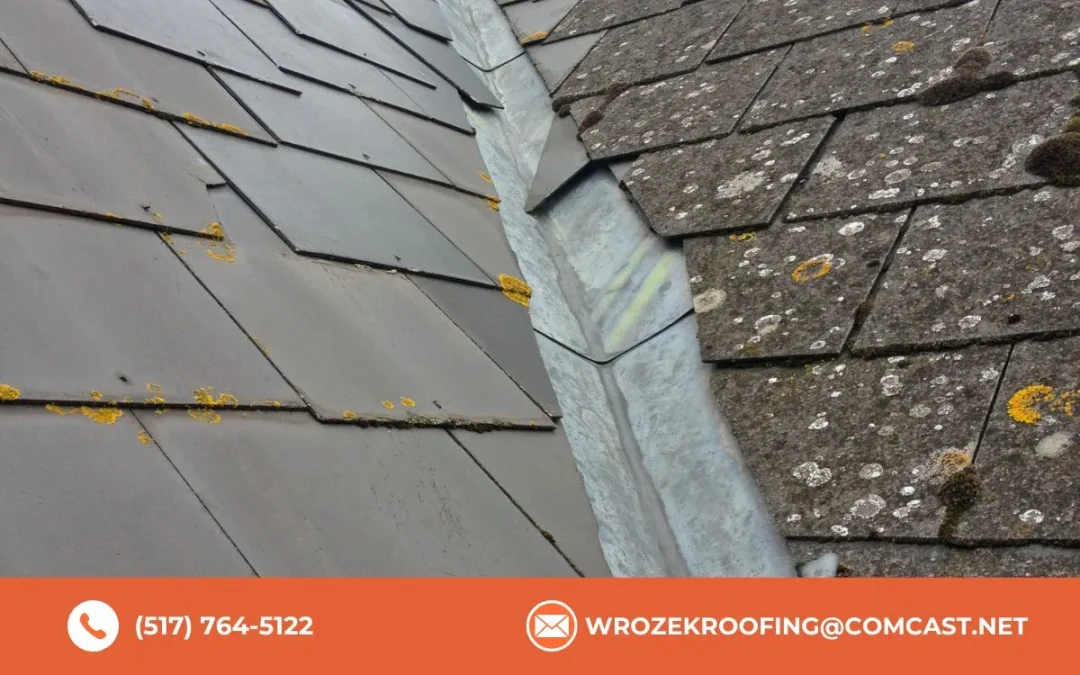
Most of the time, we think about a roof as one large surface that keeps rain and snow out. In reality, different parts of the roof handle water in very different ways. One of the most important—and most vulnerable—is the roof valley, where two sloping sections meet and direct water downward.
If you have ever wondered what is a roof valley, the easiest way to picture it is as a drainage channel built into the roof. Water from two roof planes can flow into the same area, which means valleys often handle more water and debris than other sections of the roof. At J. Wrozek Roofing, we pay close attention to them because valley problems can become roof leaks before a homeowner realizes there is a problem.
What Is a Roof Valley?
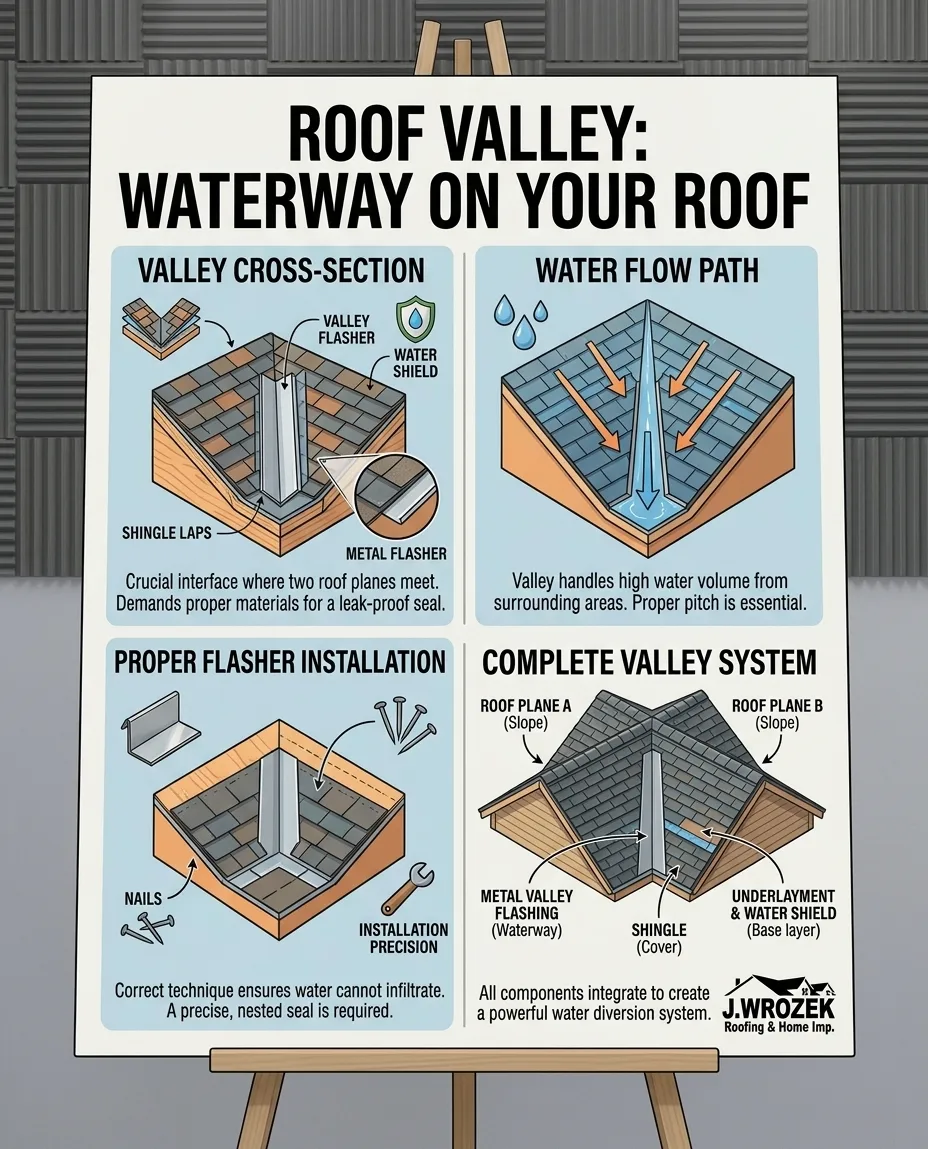
A roof valley forms where two sections of a sloped roof meet. Instead of running toward one edge, water from both sections is directed into the valley and then toward the home’s drainage system. That makes the valley an important part of the roof’s water-shedding design. It also means that anything that affects the valley—damaged shingles, worn flashing, debris, poor drainage, or ice—can interfere with how water leaves the roof. Valleys are especially important in Michigan because roofs have to deal with heavy rain, snow, ice, wind, and repeated freeze-thaw cycles throughout the year.
Why Roof Valleys Take So Much Abuse
Think about where water goes during a heavy rainstorm. It does not simply run evenly across the entire roof. Large amounts of runoff are naturally directed toward valleys, where two roof sections meet.
That constant flow puts additional stress on the materials in and around the valley. Leaves and small branches can also collect there, especially when nearby trees overhang the roof. During winter, snow and ice can create another layer of pressure and restrict normal drainage.
A valley that is already worn or poorly protected may therefore become one of the first places where a roof develops a leak. Our roof repair team sees valleys among the vulnerable areas that commonly need attention, along with flashing around chimneys and vents, gutters, and other roof penetrations.
What Are the Different Types of Roof Valleys?
When homeowners search for the types of roof valleys, they will generally come across two main categories: open valleys and closed valleys. An open valley leaves part of the valley lining exposed between the shingles. This creates a visible channel for water to follow and makes the valley detail easy to identify from the roof surface.
A closed valley uses shingles that extend across or meet within the valley, creating a more continuous appearance. There are different ways a closed valley can be installed, depending on the roofing materials and construction method. Neither style is automatically the right choice for every roof. The roof design, materials, manufacturer requirements, and installation method all matter. What is most important is that the valley is built to move water properly and remains properly integrated with the rest of the roofing system.
What Are V and W Types of Roof Valley?
You may also see references to V and W types of roof valley when researching valley construction. These terms generally describe the shape of metal valley flashing. A V-shaped valley has a central bend that forms a channel for water. A W-shaped design has a raised section along the center, helping separate runoff from the two roof planes.
The best configuration depends on the specific roofing system and how the valley is designed. The shape itself is not what makes a valley reliable; correct installation, proper water flow, and durable materials are what matter most.
What Does a Healthy Roof Valley Look Like?
A healthy roof valley should provide a clear path for water without obvious damage or areas where debris is trapped. The surrounding shingles should remain secure, and the valley materials should not show signs of significant deterioration.
From the ground, you may not be able to see enough detail to judge its condition. Still, homeowners can watch for obvious changes after storms, including missing shingles, loose materials, branches, or large amounts of debris sitting in the valley. Inside the home, water stains or damp areas near the attic can be another warning sign. The actual leak may not appear directly beneath the valley because water can travel along the roof structure before becoming visible.
Common Problems That Affect Roof Valleys
Several issues can cause a valley to stop protecting the home properly. Damaged shingles can create openings, while worn or improperly installed flashing can allow water beneath the roofing materials. Debris is another common concern. Leaves, twigs, and other material can collect in the valley and interfere with drainage. During winter, snow and ice may make existing drainage problems more serious.
Poor installation can also create trouble. If the valley is not properly integrated with the surrounding roofing materials, water may find a path underneath the shingles instead of following the intended drainage route. The problem is not always obvious from outside. In some cases, the first sign is a leak that appears inside the house.
Why a Valley Leak May Show Up Somewhere Else
One of the most frustrating things about roof leaks is that water does not always appear where it entered. Once moisture gets beneath the roofing materials, it can travel along the decking, framing, or other parts of the roof structure. That means a homeowner may see a stain on a ceiling several feet away from the actual entry point. This is one reason we do not recommend assuming that the visible stain tells you exactly where the roof needs repair.
Our leak repair service focuses on finding the source of the problem rather than simply treating the area where the water finally becomes visible. Valleys are high-priority inspection points because of the amount of water they handle.
When Does a Roof Valley Need Repair?
A damaged valley does not automatically mean the entire roof needs to be replaced. If the problem is limited to a specific section, roof valley repair may be enough. The appropriate repair depends on what caused the problem. It could involve damaged shingles, valley flashing, debris buildup, or another localized issue. Once the surrounding roof is inspected, we can determine whether the problem is limited to the valley or part of a larger roofing issue.
Our approach at J. Wrozek Roofing is to identify what actually needs fixing. If the roof can be repaired, we do not push homeowners toward unnecessary replacement. If the roof has widespread deterioration, we explain why replacement may make more sense.
When a Valley Problem Points to a Larger Roof Issue
Sometimes the valley is not the only problem. If the surrounding shingles are badly worn, there are leaks in several areas, or the roof is already near the end of its service life, repairing one valley may only provide a short-term solution. In those cases, we look at the condition of the entire roofing system. J. Wrozek Roofing considers factors such as roof age, damage across multiple areas, recurring leaks, and widespread deterioration when determining whether repair or replacement is the more practical option. That helps homeowners understand whether they are dealing with one isolated problem or a roof that is beginning to fail in several places.
Jackson County Weather Makes Valley Maintenance Important
For homeowners in Jackson County, roof valleys face the same seasonal conditions as the rest of the roof, but their role in drainage makes proper maintenance particularly important. Heavy rain can send large amounts of water through the valley, while winter snow and ice can interfere with normal runoff. Wrozek Roofing has served Jackson County since 1994 and has protected more than 5,000 homes. We provide roof repairs, replacements, inspections, and gutter services throughout the area.
That local experience helps us understand the types of problems Michigan weather can create and the importance of catching roofing issues before water reaches the interior of the home.
What Homeowners Can Do to Protect Their Roof Valleys
Homeowners can help by keeping nearby trees trimmed, removing debris from accessible areas, and keeping gutters clear so water has a reliable path away from the roof. After major storms, look for branches, missing shingles, or other visible changes. If you notice water stains inside the home or repeated problems in the same area, arrange an inspection instead of waiting for the next storm. Do not climb onto a wet, icy, or damaged roof to inspect the valley yourself. A professional can assess the area more safely and determine whether repair is necessary.
Keep an Eye on This Overlooked Part of Your Roof
A roof valley may not attract much attention during everyday home maintenance, but it plays a major role in moving water away from your home. Because runoff from two roof sections can meet in the same channel, valleys are exposed to more water and debris than many other parts of the roof. Understanding what is a roof valley, knowing the common types of roof valleys, and recognizing the early signs of damage can help you take action before a small problem turns into a larger leak.
At J. Wrozek Roofing, we provide roof valley repair, roof leak repair, roof repairs, and complete roof replacements throughout Jackson County, Michigan. If you have noticed damaged shingles, standing debris, water stains, or a leak near a valley, call (517) 764-5122 to schedule an assessment. We will inspect the problem, explain what we find, and help you determine the most practical next step for your home.