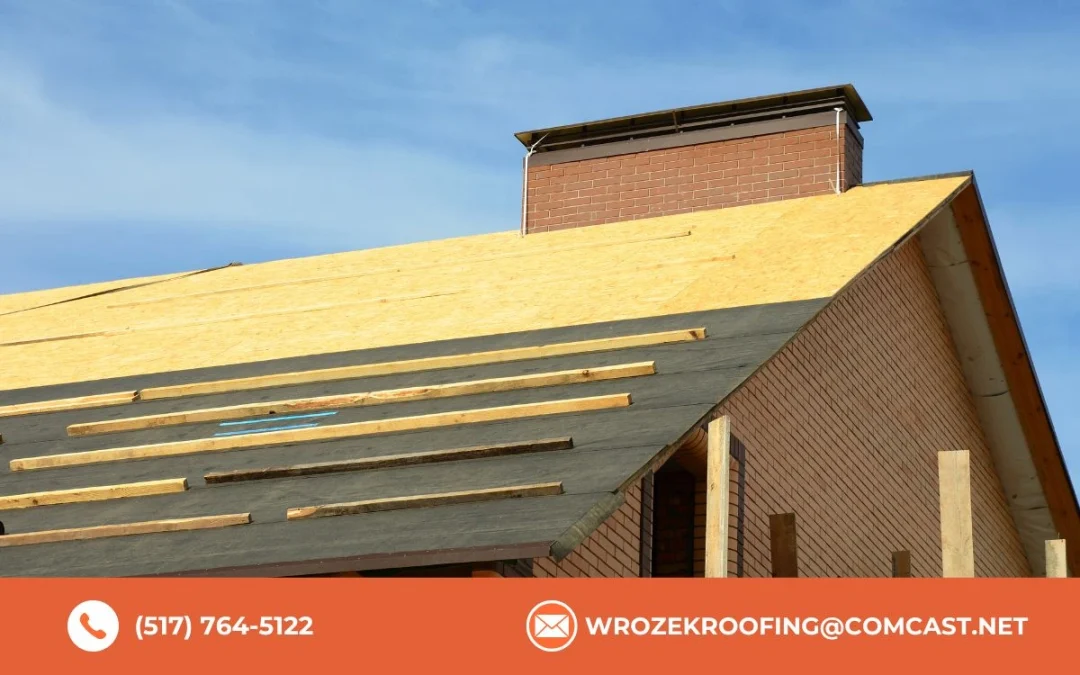
When most homeowners think about their roof, they picture the shingles they can see from the ground. Underneath those shingles, however, is another important part of the roofing system that does much of the structural work: the roof decking. Also called roof sheathing, decking forms the solid surface that supports the roofing materials above it.
At J. Wrozek Roofing, we inspect the decking during roof replacement because hidden damage can affect the performance of the entire new roof. Moisture, leaks, poor ventilation, and long-term wear can weaken the decking, and some of these problems are not visible until the old roofing materials are removed.
What Is Roof Decking?
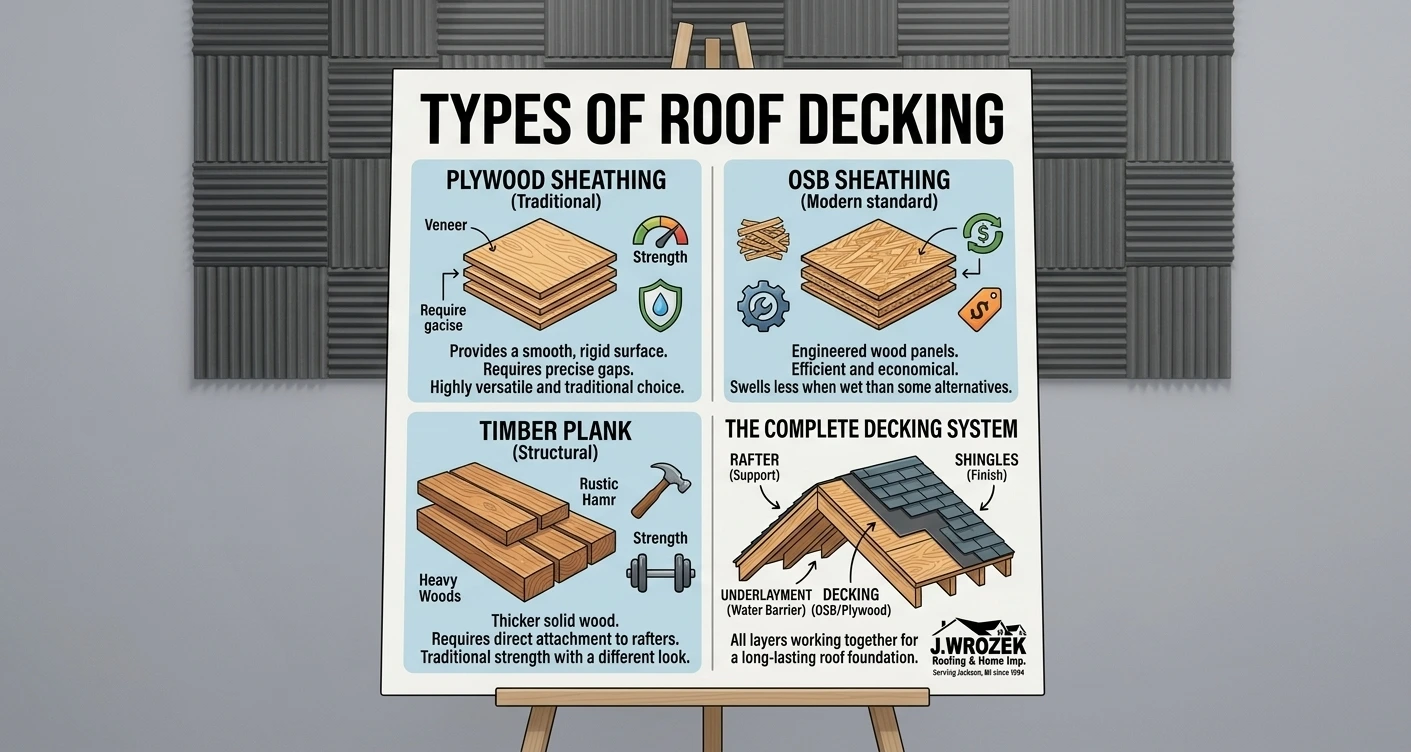
Roof decking is the layer of plywood, OSB, wood boards, or another approved material installed over the roof’s rafters or trusses. The shingles, underlayment, and other roofing components are installed above it, making the decking the base that supports the roof system.
Because the decking is covered by other roofing materials, homeowners rarely see its condition during a normal inspection. A roof can look relatively good from the outside while the decking underneath has already been affected by moisture. That is one reason we pay close attention to the decking whenever we remove an existing roof.
Why Does Roof Decking Matter?
The decking provides the stable surface needed for the rest of the roofing system. If it becomes weak, warped, cracked, or rotten, the shingles and underlayment may not have the solid foundation they need.
Moisture is one of the most common causes of decking damage. A roof leak that continues over time can allow water to reach the wood underneath the shingles. Poor attic ventilation can also contribute to moisture buildup and condensation, which may eventually lead to decay. A damaged deck is therefore more than a cosmetic concern. It can affect the performance and stability of the roofing system.
Signs of Bad Roof Decking
Because most of the decking is hidden, homeowners may notice other signs before they ever see the damaged wood itself. Knowing the signs of bad roof decking can help you recognize when a professional inspection is worthwhile.
Some warning signs include:
- Sagging areas on the roof or ceiling
- Water stains in the attic or on ceilings
- Dark or discolored wood
- Soft or spongy areas
- Musty odors
- Cracking or crumbling wood
- Recurring roof leaks
GAF notes that sagging, leaks, discoloration, and other visible changes can indicate problems with roof sheathing or decking. These symptoms do not always mean the decking itself is damaged, but they provide a good reason to have the roofing system evaluated.
Why You May Not Know Your Decking Is Damaged
One of the biggest challenges with roof decking is that it remains hidden beneath the shingles. A homeowner may know that the roof has a leak without realizing that water has also affected the wood underneath.
For this reason, a proper roof inspection looks beyond the visible shingles. An inspection can identify warning signs in the attic, around roof penetrations, and in other areas where moisture may have entered the roofing system. During a roof replacement, the situation becomes even clearer because removing the existing shingles and underlayment gives the roofing contractor an opportunity to inspect the decking directly.
When Roof Deck Replacement Is Necessary
Not every damaged section needs the entire roof deck replaced. If the problem is limited to a specific area, a contractor may be able to remove and replace only the compromised decking. Roof deck replacement may be needed when the wood has significant moisture damage, rot, holes, cracks, warping, or other conditions that prevent it from providing a sound surface for the new roofing materials.
At J. Wrozek Roofing, we inspect the decking after the old roofing system has been removed. If we find damaged areas, we can explain what we found and what needs to be replaced before the new roof is installed. This helps ensure that homeowners are not simply covering an existing problem with new shingles.
Why Roof Decking Is Checked During Roof Replacement
A roof replacement involves much more than putting new shingles over an old roof. The existing materials are removed so the underlying structure can be inspected before the new roofing system is installed.
This is an important step because damaged decking may not be visible until the old roof is removed. GAF notes that insufficient or damaged roof decking may only become apparent during roof removal and can affect both project timing and cost.
We believe homeowners should know about this possibility before their project begins. If damaged decking is discovered, we explain the issue rather than simply proceeding with the installation over an unsuitable surface.
How Leaks Can Damage Roof Decking
A leak that seems small from inside the house can cause more damage than homeowners realize. Water can move through shingles and underlayment before reaching the decking, where repeated moisture exposure can weaken the wood.
Over time, the affected area may become discolored, soft, or structurally compromised. The longer the moisture remains, the greater the chance that additional materials will be affected. This is why we recommend addressing roof leaks instead of waiting to see whether they disappear. A leak that is repaired early may prevent a much larger repair later.
Gutters and Ventilation Can Affect the Roof Deck
Roof decking does not exist on its own. Other parts of the home can affect its condition, particularly when they allow moisture to remain around the roofing system.
Clogged gutters can cause water to back up around the roof edge, while poor attic ventilation can increase moisture and condensation below the roof deck. Both conditions can contribute to moisture-related deterioration over time. That is why we look at the roofing system as a whole. A successful repair or replacement should address the source of the moisture when possible, not only the damaged wood.
What Happens When We Find Damaged Decking?
When damaged decking is discovered during a roof replacement, the affected section needs to be removed so the contractor can assess what lies underneath. Replacement material is then installed and secured before the new roofing system is completed.
The exact amount of work depends on the condition of the roof. Sometimes only a few sections need replacement. In other cases, widespread moisture or structural damage may require more extensive work. We explain those findings to the homeowner before moving forward with additional work so there is a clear understanding of what is necessary.
How We Approach Roof Decking at J. Wrozek Roofing
When you choose J. Wrozek Roofing for a roof replacement, we do not simply focus on the shingles visible from outside. Our replacement process includes removing the existing roofing materials and checking the roof deck underneath.
If we find damaged decking, we can identify the affected areas and explain the repair needed before the new roofing system is installed. That extra step helps create a stronger foundation for the roof rather than leaving hidden damage underneath new materials.
We have served Jackson County since 1994 and have protected more than 5,000 homes throughout the area. Our local experience includes roof repairs, roof replacements, new roof installations, and storm-related roofing work.
Roof Decking and Your Jackson County Roof Replacement
For homeowners planning a roof replacement Jackson County project, understanding the condition of the decking is an important part of planning the job. Michigan weather brings heavy rain, snow, ice, high winds, and repeated changes in temperature, all of which can put stress on a roofing system.
The condition of your roof deck may not be obvious before the project begins, which is why an inspection and proper tear-off are important. Once the existing materials are removed, we can determine whether the deck is ready for the new roof or whether certain areas need to be replaced.
This is also why an initial estimate may change if hidden damage is discovered. The additional work is not simply an extra expense; it may be necessary to provide a sound surface for the new roofing system.
Protect the Foundation of Your Roof
Roof decking may not be the part of your roof you notice first, but it is one of the layers that your entire roofing system depends on. When it is weakened by moisture, rot, or structural damage, installing new shingles alone may not solve the underlying problem.
If you have noticed signs of bad roof decking, recurring leaks, sagging, or water damage, J. Wrozek Roofing can inspect the roof and explain what we find. We provide roof decking service, roof repairs, roof replacements, and related exterior services throughout Jackson County. When a replacement is needed, we inspect the decking before installing the new roof so that hidden problems can be addressed at the right stage of the project.