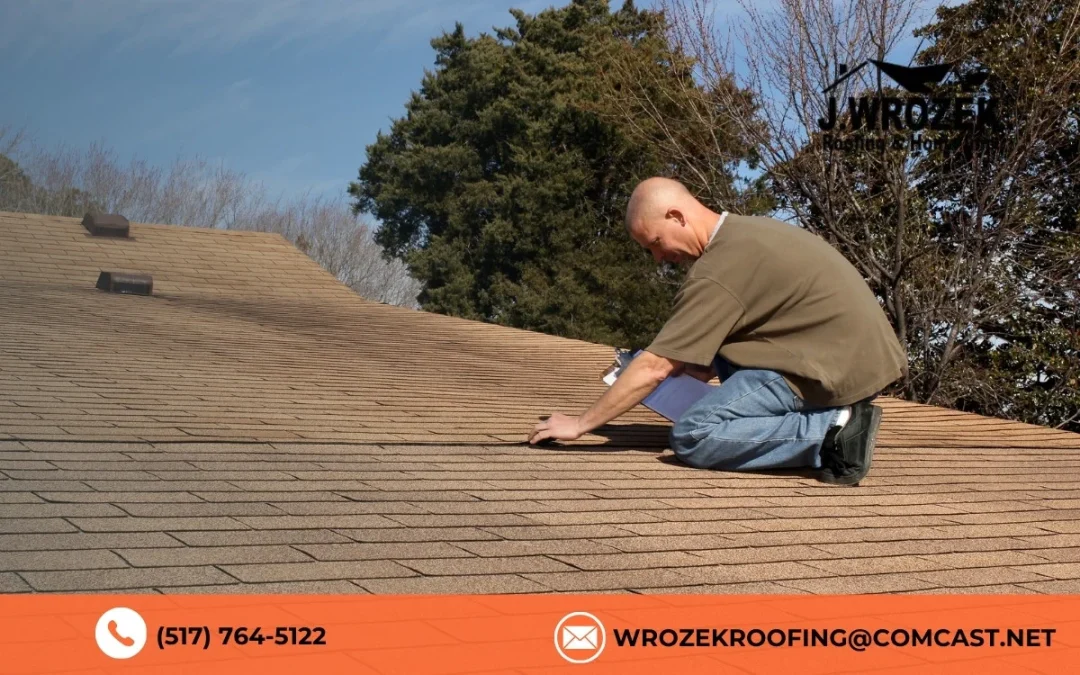
When a roof problem looks small, many homeowners think about fixing it themselves. A loose shingle, a small leak, cracked sealant, or damaged flashing may seem like something that can be handled with a ladder, a tube of caulk, and a quick trip to the hardware store. At first, DIY roof repairs may feel like a smart way to save money and avoid scheduling a professional service call but is it really like that?
The problem is that roofing issues are not always as simple as they look from the outside. A small leak may be connected to damaged underlayment, weak decking, poor flashing, attic moisture, or storm damage that is not visible from the ground. For homeowners in Jackson County and surrounding Michigan areas, weather can make these problems worse quickly. Rain, snow, ice, wind, and freeze-thaw cycles can turn a temporary patch into a much more expensive repair later.
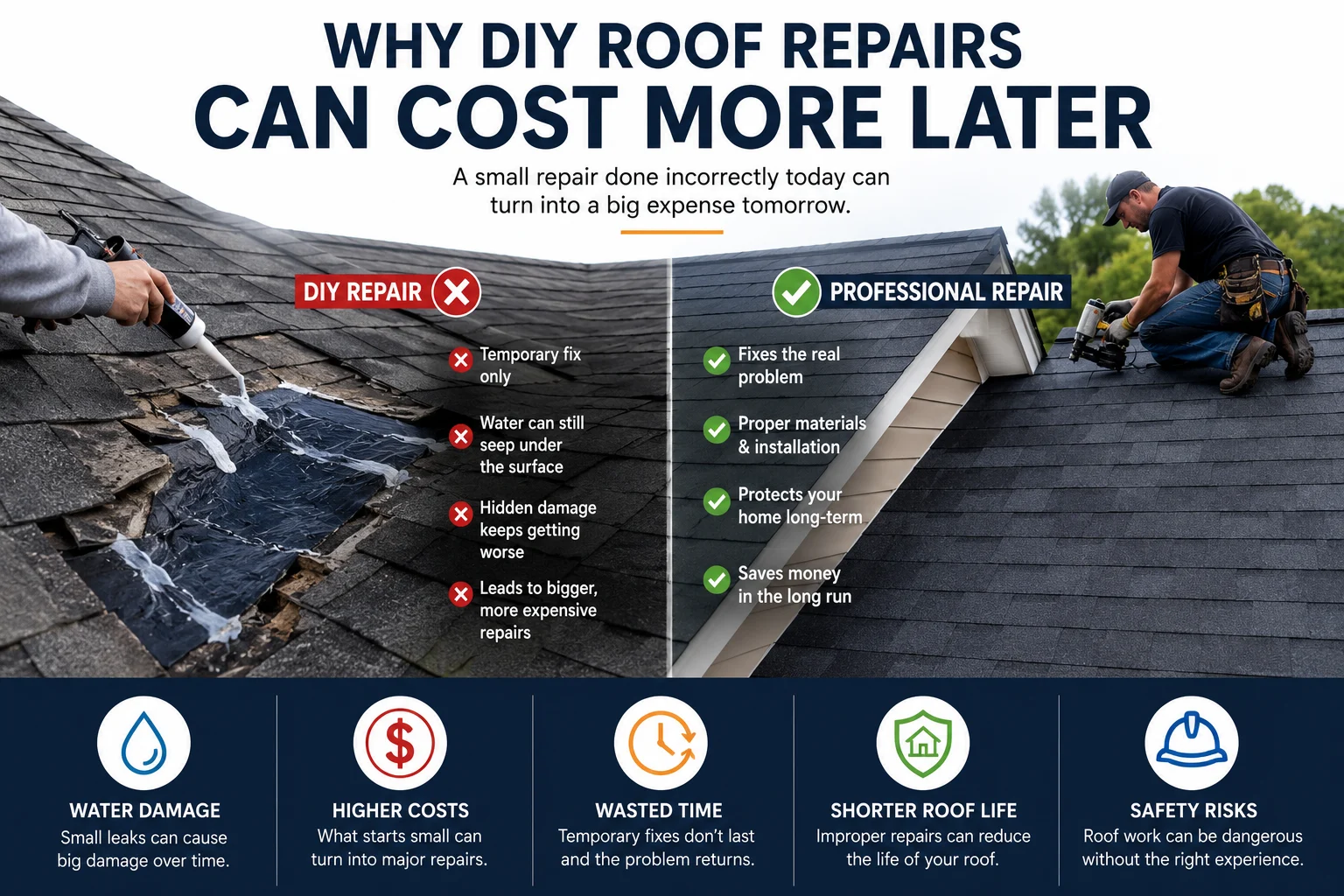
DIY Repairs Often Cover the Symptom, Not the Real Problem
One of the biggest risks with DIY roof repairs is that they often fix what is visible, not what is actually causing the issue. For example, a homeowner may notice water dripping near a ceiling and assume the leak is directly above that spot. In reality, roof leaks can travel along rafters, insulation, decking, or interior framing before showing up inside the home. Because water makes its own path, if you block the leaking spot, it may create a new path.
This means a patch in the wrong area may not stop the water from entering. It may only delay the signs for a short time while moisture continues to spread behind the scenes. A professional roof inspection looks beyond the surface and checks the shingles, flashing, vents, chimney areas, valleys, and attic conditions to find where the problem truly begins.
Small Roof Leaks Can Turn Into Bigger Damage
A small roof leak may not seem urgent at first, especially if it only appears during heavy rain. However, even minor water intrusion can create serious problems when it continues over time. Water can damage insulation, stain ceilings, weaken drywall, affect wood framing, and create conditions where mold may grow.
In Michigan, leaks can become worse during winter because trapped moisture may freeze and expand. This can open gaps wider, lift materials, and make the roof more vulnerable during the next storm. What started as a simple roof leak repair can eventually require interior repairs, insulation replacement, decking repair, or even partial roof replacement if the damage is ignored too long.
Incorrect Materials Can Make the Problem Worse
Roofing materials are designed to work together as a system. Shingles, flashing, underlayment, sealants, vents, fasteners, and drip edges all play a role in moving water away from the home. When the wrong material is used during a DIY repair, it can create a weak point instead of solving the issue.
For example, using standard caulk instead of proper roofing sealant may fail quickly under sun, rain, and temperature changes. Installing the wrong type of flashing or placing shingles incorrectly can also allow water to move underneath the roof surface. A repair may look finished from the outside, but if water flow is not handled properly, the roof can continue leaking.
Read also: The Roof Problems That Start in Your Attic, Not on Your Shingles
Roof Flashing Repairs Require Proper Installation
Flashing is one of the most common areas where DIY repairs go wrong. Roof flashing protects vulnerable areas such as chimneys, vents, valleys, skylights, sidewalls, and roof edges. These areas need careful installation because water naturally collects and moves through transitions in the roof.
If flashing is bent, sealed incorrectly, overlapped the wrong way, or fastened in the wrong place, water can slip behind it. This is especially common around chimneys, where a leak may be caused by damaged step flashing, counter flashing, cracked sealant, or masonry problems. A quick patch may hide the issue temporarily, but professional roof flashing repair is often needed to stop repeat leaks.
DIY Repairs Can Create Safety Risks
Roof repair is also physically risky. Climbing onto a roof may look simple, but steep slopes, loose shingles, wet surfaces, soft decking, and sudden wind can make the job dangerous. Even a single mistake can lead to a fall or injury, especially for homeowners who do not have the right equipment or roofing experience.
The risk becomes even higher after storms, rain, snow, or ice because the roof surface may be slippery or unstable. A professional roofing contractor has the tools, safety equipment, and experience to inspect and repair roof damage more safely. Saving money on a repair is not worth the risk of a serious injury.
Temporary Patches May Void Product Protection
Some roofing materials may have manufacturer warranties or installation protections, but improper repairs can affect that coverage. If shingles, flashing, sealants, or other materials are handled incorrectly, it may become harder to make a valid claim later. This is especially important if the roof is newer or if storm damage may be involved.
A professional roofing contractor can document damage, explain repair options, and use materials that match the roofing system. This helps protect the home and may also help homeowners keep better records for insurance or warranty-related situations. DIY repairs may seem cheaper in the moment, but they can create complications if the roof needs professional attention later.
Storm Damage Is Easy to Misjudge
After high winds, hail, or heavy rain, homeowners may notice a few missing shingles and assume that is the only problem. However, storm damage can affect more than the visible surface. Shingles may be bruised, lifted, loosened, or weakened even if they are still attached. Flashing, vents, gutters, and roof edges may also be affected.
If storm damage is not inspected properly, the roof may continue to deteriorate over time. This can lead to future leaks, moisture damage, and higher repair costs. A professional roof inspection after a storm can help identify hidden damage before it becomes a bigger issue.
Poor Repairs Can Shorten Roof Lifespan
A roof is designed to shed water in a specific direction. When shingles are lifted, nailed incorrectly, sealed improperly, or patched without understanding the roof system, water may no longer move the way it should. This can place extra stress on nearby materials and shorten the life of the roof.
Over time, repeated DIY patches can create an uneven, unreliable roofing surface. Instead of solving one issue, the roof may develop several weak areas. A professional repair helps protect the roof as a complete system, not just one visible spot.
Professional Roof Repair Can Save Money Long-Term
Calling a roofing contractor may feel more expensive at first, but it can save money by solving the right problem the first time. A professional can determine whether the issue needs a simple repair, flashing correction, shingle replacement, ventilation improvement, or a larger roofing solution.
This matters because not every roof problem requires replacement, but not every problem can be fixed with a small patch either. The right inspection helps homeowners avoid guessing. When the repair is handled correctly, it reduces the chance of repeat leaks, hidden damage, and emergency costs later.
When Should You Call a Roofing Contractor?
Homeowners should call a roofing contractor if they notice ceiling stains, water dripping, missing shingles, loose flashing, damaged vents, sagging roof areas, mold smells, damp attic insulation, or leaks after storms. These signs may point to a problem that needs more than a surface repair.
It is also smart to schedule a roof inspection if the roof is aging or if previous repairs keep failing. A professional inspection can help catch small problems before they spread. This is especially important in Jackson County and Michigan communities where weather changes can put extra pressure on roofing materials.
Call J. Wrozek Roofing for Professional Roof Repair
If you are dealing with a roof leak, damaged shingles, flashing problems, storm damage, or a repair that keeps coming back, J. Wrozek Roofing & Home Improvements can help. Our team provides roof inspections, roof repair, roof leak repair, and professional roofing services for homeowners in Jackson County and nearby Michigan areas.
Before a small roofing issue turns into costly water damage, schedule an inspection with a trusted local roofing contractor. Contact J. Wrozek Roofing today to get the problem checked and protect your home with the right repair.
Request EstimateFAQs
Are DIY roof repairs a bad idea?
DIY roof repairs can be risky because the visible issue may not be the real cause of the problem. A small patch may temporarily slow a leak, but hidden damage around flashing, shingles, vents, or the attic can continue spreading.
Why do roof leaks come back after DIY repairs?
Roof leaks often return because water may be entering from a different area than where the stain appears inside the home. If the source is not correctly found and repaired, the leak can come back during the next heavy rain or snow melt.
Can using the wrong roofing material cause more damage?
Yes. Roofing materials must work together to direct water away from the home. The wrong sealant, nails, flashing, or shingle placement can create gaps where water can enter and cause more damage over time.
When should I call a roofing contractor instead of fixing it myself?
You should call a roofing contractor if you see water stains, missing shingles, loose flashing, leaks after storms, damp attic insulation, or repeated roof problems. These signs may point to hidden damage that needs professional inspection.
Can professional roof repair save money long-term?
Yes. Professional roof repair can save money by fixing the actual cause of the problem before it spreads. This can help prevent water damage, mold issues, insulation damage, and larger roof repairs later.