When energy bills start climbing, many homeowners first blame the furnace, air conditioner, windows, or thermostat. While those can all play a role, your roof may also be part of the problem. Your roofing system affects heat movement, attic airflow, moisture control, and indoor comfort more than many people realize.
For homeowners in Jackson County and nearby Michigan areas, roof performance matters in every season. Cold winters, hot summers, snow, rain, wind, and ice can all put pressure on the roof. If your roof is damaged, poorly ventilated, or no longer working as it should, your heating and cooling system may have to work harder, leading to higher energy bills.
Your Roof Plays a Bigger Role Than You Think
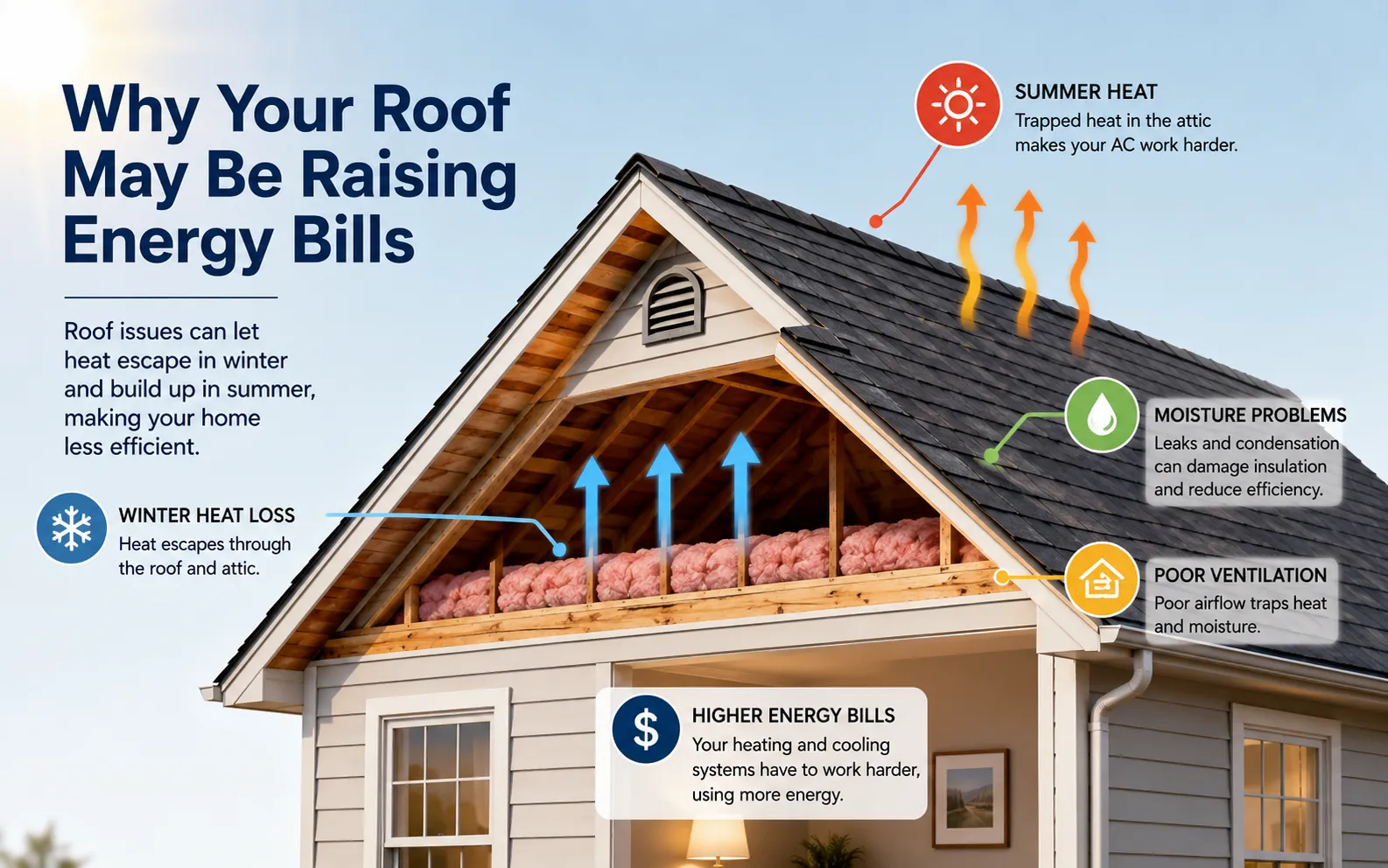
Your roof is not just a cover over your home. It works with your attic, insulation, and ventilation system to help keep indoor temperatures stable. When everything is working properly, your home holds heat better in the winter and stays cooler in the summer. When the roofing system has weak points, your home can lose conditioned air faster. Heat may escape through the attic in winter, while trapped attic heat can make your home warmer in summer. This extra strain can cause your HVAC system to run longer and use more energy.
Read Also: 5 Common Roof Problems Found in Jackson County Homes
Poor Attic Ventilation Can Increase Energy Costs
Attic ventilation is one of the most common roofing-related reasons for high energy bills. In the summer, poor ventilation can trap hot air inside the attic. That heat can move into the rooms below, making your air conditioner work harder to keep the home comfortable. In winter, poor attic ventilation can also create moisture problems. Warm indoor air can rise into the attic and meet cold roof surfaces, leading to condensation. Over time, this can affect insulation, roof decking, and overall roof energy efficiency. Proper airflow helps protect both your roof and your home comfort.
Damaged Shingles Can Reduce Roof Performance
Damaged shingles may seem like a simple exterior issue, but they can affect more than curb appeal. Cracked, curled, missing, or loose shingles can expose parts of the roof system to moisture and outside air. Once the roof surface weakens, the layers underneath may become more vulnerable. If water reaches the underlayment, decking, or attic insulation, your home’s energy performance can drop. Wet insulation does not work as well as dry insulation, which means your home may lose heat in winter and gain heat in summer. This is one reason roof damage should not be ignored.
Roof Leaks Can Damage Insulation
A small roof leak can create a larger energy problem over time. Water can enter through damaged shingles, roof flashing, chimney areas, vents, valleys, or roof edges. Once moisture reaches the attic, it can soak insulation and reduce its ability to protect the home from outdoor temperatures. Roof leaks can also lead to mold, wood rot, ceiling stains, and structural damage if they continue for too long. Even if the leak looks minor, the hidden damage may be more serious. A professional roof inspection can help find the source before it turns into a more expensive repair.
Old Roofing Materials May Be Less Efficient
As roofing materials age, they naturally lose some of their strength and protective ability. Shingles may become brittle, faded, curled, or loose. Older roofs may also have outdated ventilation, worn flashing, or hidden installation issues that affect performance. If your roof is near the end of its lifespan, repairs may help for a while, but they may not solve every problem. A roofing contractor can inspect the roof and explain whether roof repair or replacement makes more sense for your home. The right decision can help protect comfort, energy use, and long-term repair costs.
Ice Dams Can Signal Heat Loss
In Michigan, ice dams are a common winter roofing problem. They often form when heat escapes into the attic and warms the roof deck. Snow melts, runs down the roof, and refreezes near the colder roof edges. This creates ice buildup that can force water under the shingles. Ice dams may point to insulation, ventilation, or roof performance issues. If you notice heavy ice along the roof edge, icicles, or winter leaks, it may be more than a weather problem. It could be a sign that your roof and attic system are not managing heat correctly.
Signs Your Roof May Be Raising Energy Bills
A roofing issue may be affecting your energy costs if certain warning signs appear around your home. These may include hot upstairs rooms in summer, cold drafts in winter, uneven room temperatures, frequent HVAC use, damp attic insulation, ceiling stains, musty smells, or visible roof damage. These signs do not always mean the roof is the only problem, but they are worth checking. A roof inspection can help determine whether damaged shingles, poor attic ventilation, roof leaks, or flashing problems are making your home less efficient.
Why a Professional Roof Inspection Matters
Energy problems are not always easy to trace. A homeowner may notice high bills, but the actual cause could be hidden in the attic, under shingles, around flashing, or near roof penetrations. That is why a professional inspection is important before guessing at the solution. A roofing contractor can check the roof surface, attic ventilation, flashing, chimney areas, vents, valleys, insulation condition, and signs of moisture. Once the issue is identified, the right repair can help protect your home and reduce the chance of repeat problems.
Call J. Wrozek Roofing for Roof Inspections and Repairs
If your energy bills are rising and your home does not feel as comfortable as it should, your roof may be part of the problem. J. Wrozek Roofing & Home Improvements provides roof inspections, roof repair, roof maintenance, and roofing services for homeowners in Jackson County and nearby Michigan communities. Do not wait until a small roof issue becomes a bigger expense. Contact J. Wrozek Roofing today to schedule an inspection and find out whether your roof is affecting your home’s comfort and energy efficiency.
FAQs
Can a bad roof really increase energy bills?
Yes. A damaged or poorly ventilated roof can make it harder for your home to hold comfortable temperatures. This can cause your heating and cooling system to run more often, which may increase energy bills.
How does attic ventilation affect energy efficiency?
Attic ventilation helps move hot and moist air out of the attic. Without proper airflow, heat can build up in summer and moisture can collect in winter, making the home less comfortable and possibly affecting roof performance.
Can roof leaks damage insulation?
Yes. If water enters the attic, it can soak insulation. Wet insulation does not perform properly, which can lead to heat loss, moisture problems, and higher energy use.
What roof problems should I look for if my bills are high?
Look for missing shingles, curled shingles, roof stains, ceiling stains, damp attic insulation, musty smells, ice dams, or poor airflow in the attic. These signs may point to a roofing or ventilation issue.
Should I repair or replace my roof to improve energy efficiency?
It depends on the condition of your roof. Small issues may only need repair, while an older or badly damaged roof may need replacement. A professional roof inspection can help you make the right decision.