
Roof flashing is one of the most important parts of your roofing system, but many homeowners do not think about it until a leak appears. Flashing is the thin metal material installed around vulnerable roof areas to help direct water away from openings, seams, and transitions. For homeowners in Jackson County and surrounding Michigan areas, roof flashing plays a major role in protecting the home from rain, snow, ice, and wind-driven moisture. When flashing is damaged, loose, rusted, or poorly installed, water can enter the roof system and cause problems inside the home.
What Is Roof Flashing?
Roof flashing is usually made from metal and installed in areas where the roof surface changes direction or meets another structure. These areas are more likely to leak because water naturally collects, slows down, or moves through seams. You will often find flashing around chimneys, skylights, vents, valleys, dormers, sidewalls, and roof edges. Its job is simple but important: move water away from places where it could enter the home. Without proper flashing, even a newer roof can develop leaks.
Why Roof Flashing Matters
Shingles are designed to shed water, but they cannot protect every part of the roof on their own. Any area where the roof meets a wall, pipe, chimney, or valley needs extra protection. That is where flashing becomes essential. When roof flashing works correctly, water flows over the metal and away from the vulnerable area. When flashing fails, water can slip underneath shingles or behind walls. Over time, this can lead to water stains, damaged insulation, mold, wood rot, and costly repairs.
Common Areas Where Flashing Is Installed
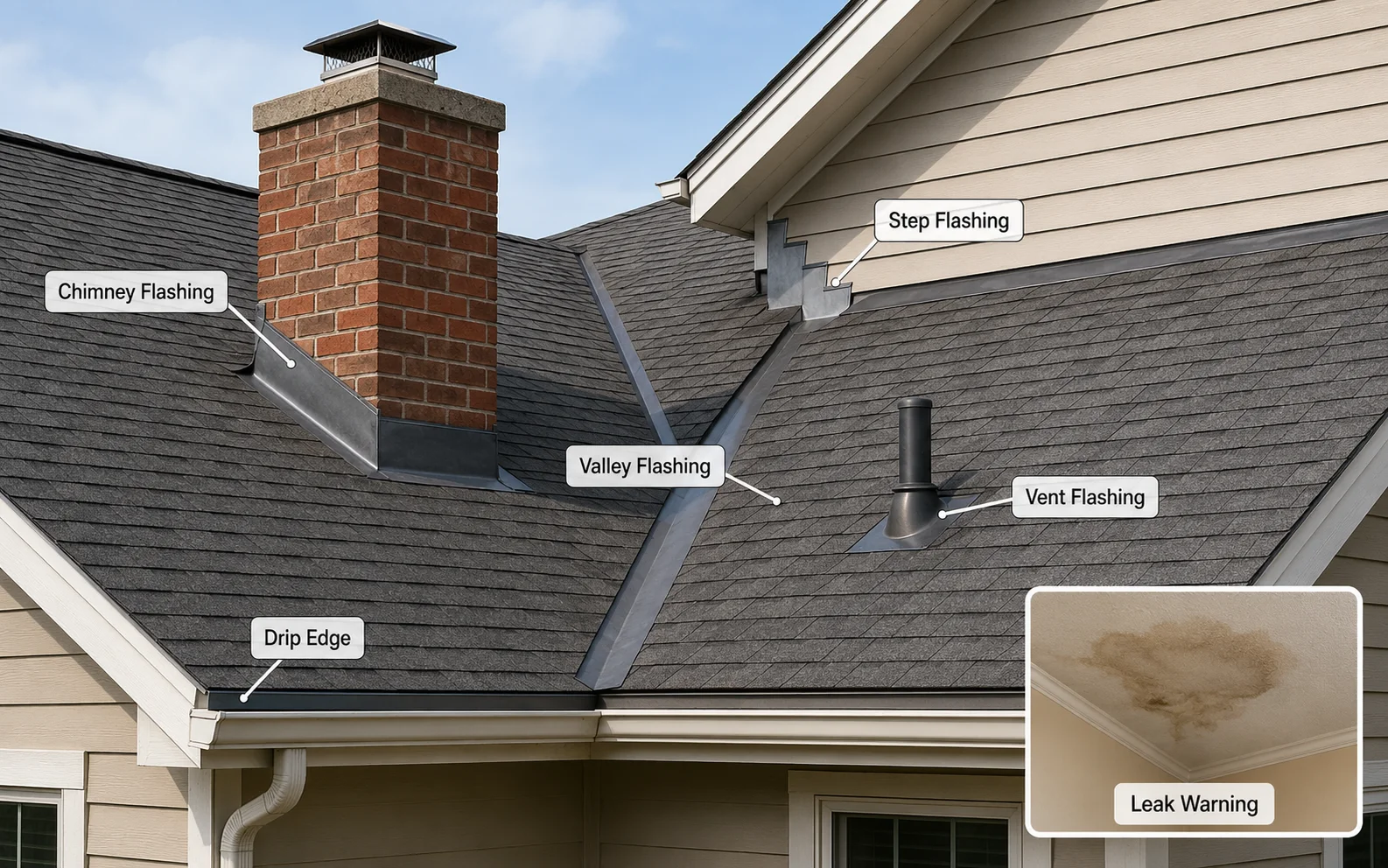
Flashing is used in several key roof areas. Chimney flashing protects the base of the chimney where it meets the roof. Step flashing is installed where the roof meets a vertical wall. Valley flashing helps guide water through roof valleys where two slopes meet. Flashing is also used around roof vents, plumbing pipes, skylights, dormers, and drip edges. Each area requires the right type of flashing and proper installation. If one section is missing or poorly sealed, it can become a weak point during heavy rain or melting snow.
Signs Your Roof Flashing May Be Damaged
Damaged roof flashing is not always obvious from the ground, but there are warning signs homeowners can watch for. Water stains on ceilings, damp attic insulation, peeling paint, musty smells, or leaks after storms may point to a flashing issue. Outside the home, look for rusted metal, loose flashing, lifted shingles, cracked sealant, or gaps around chimneys and vents. If you notice any of these signs, it is better to schedule a roof inspection before the problem spreads.
What Causes Roof Flashing to Fail?
Roof flashing can fail for several reasons. Age is one of the most common causes. Over time, metal can corrode, sealant can crack, and fasteners can loosen. Michigan weather can also speed up the process because roofs deal with freezing temperatures, snow, ice, rain, and strong winds. Poor installation is another major cause. If flashing was not fitted correctly, overlapped properly, or sealed the right way, it may allow water to enter even if the roof looks fine. Storm damage, falling branches, and repeated freeze-thaw cycles can also weaken flashing over time.
Why Flashing Problems Should Not Be Ignored
A flashing issue may look small, but it can lead to serious damage. Water can enter behind shingles and travel into the attic, walls, ceilings, and insulation. This can make the leak difficult to trace because the visible stain may appear far from the actual entry point. Ignoring damaged flashing can also make roof repairs more expensive. A simple roof flashing repair may turn into a larger roof leak repair if water damages wood decking, drywall, or interior finishes. Acting early is always the safer choice.
Can Roof Flashing Be Repaired?
In many cases, roof flashing can be repaired if the damage is limited. An expert roofing contractor may reseal small gaps, replace damaged sections, secure loose flashing, or correct installation problems. However, if the flashing is badly rusted, bent, missing, or surrounded by damaged shingles, replacement may be necessary. The right solution depends on the condition of the flashing and the surrounding roofing materials. That is why a proper roof inspection is important before deciding on a repair.
Should Homeowners Try DIY Flashing Repairs?
DIY flashing repairs can be tempting, especially when the leak looks small. However, flashing must be installed with the right overlap, angle, and water flow direction. If it is patched incorrectly, water can still enter underneath the surface. Adding caulk or sealant may temporarily slow a leak, but it often does not solve the real problem. Professional roof flashing repair helps protect the roof system properly and reduces the chance of repeat leaks.
Call J. Wrozek Roofing for Roof Flashing Repair
If you think your roof flashing may be damaged, J. Wrozek Roofing & Home Improvements can help. Our team provides roof inspections, roof flashing repair, roof leak repair, and roofing services for homeowners in Jackson County and nearby Michigan communities. Do not wait until a small flashing issue turns into water damage inside your home. Contact J. Wrozek Roofing today to schedule an inspection and keep your roof protected.