
Your roof does more than sit on top of your home. It protects your family, your belongings, your attic, your insulation, and the structure underneath from Michigan’s changing weather. From heavy snow and ice to spring rain, high winds, pests, and summer heat, your roof takes pressure in every season. That is why regular roof care should always begin with a proper inspection. This Michigan roof inspection checklist gives homeowners a clear way to understand what to look for, what warning signs matter, and when it may be time to call a professional before small issues turn into costly damage.
Why Michigan Homeowners Should Inspect Their Roof Regularly
Michigan roofs face different challenges in every season. Over time, these conditions can slowly weaken the roofing system.
- Winter can bring snow buildup, ice dams, frozen gutters, and repeated freeze-thaw cycles.
- Spring often brings heavy rain and wind.
- Summer heat can dry out older shingles, while fall leaves can clog gutters and trap moisture around roof edges.
A roof inspection helps you catch early signs of damage before water enters your home. Many roofing problems begin with small warning signs such as missing granules, cracked sealant, loose flashing, damp attic insulation, or curling shingles. If these problems are ignored, they can lead to leaks, mold, rotted decking, damaged ceilings, and higher repair costs.
Best Time For Roof Inspection:
Spring and fall are usually the best times because they allow you to check for winter damage and prepare the home before harsh weather returns. For homeowners in Jackson County and other parts of Michigan, inspecting the roof at least twice a year is a smart habit. You should also inspect the roof after major storms, high winds, hail, falling branches, or heavy rain. Storm damage is not always obvious right away, but early inspection can prevent moisture from spreading into the attic and interior walls.
Roof Inspection Checklist for Michigan Homeowners
A strong roof inspection should include the exterior roofing system, gutters, flashing, ventilation, attic, interior ceilings, and nearby hazards. Use this checklist as a guide when reviewing the condition of your home.
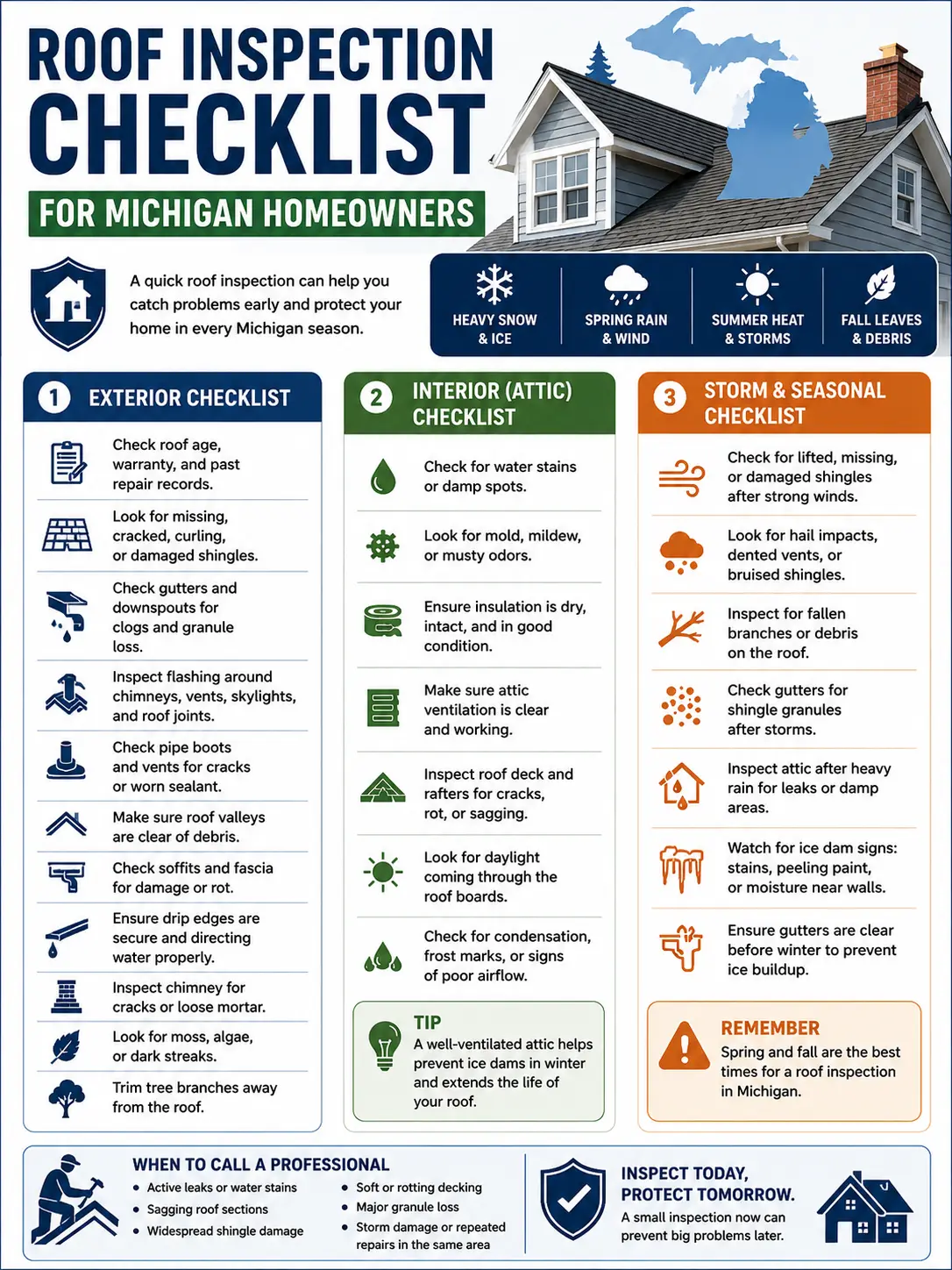
Exterior Roof Checklist
- Check the roof’s age, warranty, and past repair records so you know how old the system is and whether any previous issues may need follow-up.
- Look for missing, cracked, curling, lifted, torn, or loose shingles, especially after high winds or storms.
- Check for excessive granule loss in gutters, downspouts, and around the base of the home.
- Inspect flashing around chimneys, skylights, vents, valleys, dormers, and walls for gaps, rust, cracks, or loose edges.
- Look at pipe boots and roof vents for cracked rubber, damaged sealant, or signs of wear.
- Make sure roof valleys are clear of leaves, twigs, and debris because valleys carry large amounts of water during rain.
- Check gutters and downspouts for clogs, sagging sections, leaks, loose fasteners, and poor drainage.
- Look at soffits and fascia boards for rot, peeling paint, soft spots, moisture damage, or insect activity.
- Inspect drip edges along the roofline to make sure they are not bent, loose, or allowing water to run behind the gutters.
- Check chimneys for cracked mortar, loose caps, damaged flashing, or signs of water staining.
- Look for moss, algae, or dark streaks, especially on shaded areas of the roof.
- Make sure tree branches are not hanging over the roof or rubbing against shingles.
Interior Roof Checklist
- Check the attic for water stains, damp insulation, musty odors, or signs of moisture.
- Look for daylight coming through the roof boards, which may indicate gaps or holes.
- Inspect exposed rafters and decking for cracks, sagging, rot, or dark water marks.
- Check the ceiling inside your home for stains, bubbling paint, discoloration, or soft drywall.
- Look around upper walls and corners for mold, mildew, or peeling paint.
- Make sure attic insulation is dry, evenly placed, and not compressed or fallen.
- Check attic ventilation to make sure air can move properly through intake and exhaust vents.
- Watch for condensation, frost marks, or excessive heat buildup in the attic.
Storm Damage Checklist
- Look for shingles that have lifted, shifted, or disappeared after strong winds.
- Check for hail marks, dents on metal vents, damaged gutters, or bruised shingles.
- Look for fallen branches, broken limbs, or debris sitting on the roof.
- Inspect gutters and downspouts after storms to see if large amounts of shingle granules have washed down.
- Check the attic after heavy rain to confirm there are no fresh leaks or damp areas.
Start With a Ground-Level Inspection
You do not need to climb onto the roof to notice many warning signs. In fact, homeowners should avoid walking on the roof unless they have the right safety equipment and experience. Walk around your home slowly and look at the roof from different angles. Pay attention to the roofline, shingles, gutters, chimneys, and areas where two roof sections meet. If one section appears uneven, sagging, darker than the rest, or damaged, it may need a closer look from a professional.
Check Shingles for Damage
Shingles are the first layer of protection against rain, snow, wind, and sunlight. When shingles become damaged, water can reach the underlayment and roof decking. That is when small roofing problems can turn into serious interior damage.
Look for shingles that are curling upward, cracking, lifting at the edges, or missing completely. In Michigan, wind and freeze-thaw cycles can be especially hard on shingles. Water can get under loose areas, freeze, expand, and make the damage worse.
Granule loss is another important sign. Asphalt shingles have protective granules that help shield the roof from UV rays and weather exposure. If you notice piles of granules in your gutters or near downspouts, your shingles may be aging or deteriorating.
Inspect Gutters and Downspouts
Gutters are part of the roofing system, not just an add-on. Their job is to move water away from the roof, siding, foundation, and landscaping. When gutters clog or sag, water can back up under shingles, overflow near the foundation, or contribute to ice dams in winter.
Check your gutters for leaves, pine needles, roof granules, dirt, and small branches. Make sure water can flow freely into the downspouts. Downspouts should direct water away from the home, not drop it right beside the foundation.
In Michigan, gutter problems become more serious before winter. If water cannot drain properly, it can freeze inside the gutter system and add weight to the roof edge. This can damage fascia boards, loosen gutters, and increase the risk of ice dam problems.
Look Closely at Flashing and Roof Penetrations
Flashing protects the roof’s most vulnerable points, including chimneys, skylights, vents, valleys, dormers, and sidewalls. Even when the shingles look fine, damaged flashing can still allow water to enter the home.
Look for flashing that is loose, rusted, cracked, bent, or pulling away from the surface. Also check the sealant around vents and pipe boots. Leaks often start in these transition areas because water naturally collects and moves through them. If you see damage, it is best to schedule a roof inspection service before heavy rain exposes the weakness.
Check the Attic for Hidden Roofing Problems
The attic can reveal roof problems that are not visible from the street. A roof may look solid from the outside, but the attic may show water stains, damp insulation, mold, musty odors, or poor ventilation.
Use a flashlight to check for dark stains on wood, wet insulation, condensation, or daylight coming through the roof boards. Attic ventilation also matters. Poor airflow can trap heat and moisture, contribute to ice dams in winter, and shorten the life of shingles in summer.
Watch for Ice Dam Damage
Ice dams are a common problem for Michigan homes. They form when warm air from inside the home melts snow on the roof. That melted snow runs down to the colder roof edge and refreezes, creating a barrier that can push water under the shingles.
Warning signs include ceiling stains, peeling paint, damp attic insulation, mold growth, and moisture near exterior walls. If your home had icicles or ice buildup during winter, inspect the roof and attic in spring. Improving insulation, ventilation, and drainage can help reduce the risk of ice dams returning.
Inspect Soffits, Fascia, and Drip Edges
Soffits, fascia boards, and drip edges protect the roof’s edges, where water damage often begins. These areas are easy to overlook but play an important role in keeping moisture away from the roof deck and siding.
Check fascia boards for peeling paint, soft wood, rot, or separation from the gutters. Look at soffits for stains, cracks, holes, or pest activity. Drip edges should guide water into the gutters. If they are bent, missing, or poorly positioned, water can run behind the gutter and damage the fascia or siding.
Look for Moss, Algae, and Debris
Moss and algae are common on shaded or damp roof areas. Algae usually appears as dark streaks, while moss grows thicker and can hold moisture against the shingles. Over time, moss can lift shingles and speed up roof wear.
Avoid pressure washing the roof because it can remove protective granules and damage shingles. Also clear leaves, branches, and debris from valleys, gutters, and lower roof sections. Trapped debris blocks water flow and increases the risk of leaks, rot, and moisture damage.
Know When to Call a Professional Roofer
A homeowner checklist is useful, but some roofing issues need professional attention. Call a roofing contractor if you notice active leaks, sagging areas, widespread shingle damage, soft decking, heavy granule loss, storm damage, or repeated repairs in the same spot.
A professional roof inspection service from J. Wrozek Roofing and Home Imp. can find problems that are easy to miss from the ground, including hidden storm damage, flashing failure, ventilation issues, and weak decking. If the damage is minor, a residential roof repair service may be enough. If the roof is older or failing in several areas, a roof replacement service may be the better long-term option.
Final Thoughts
A roof inspection checklist gives Michigan homeowners a practical way to protect their home before roofing problems become expensive. By checking shingles, gutters, flashing, attic ventilation, soffits, fascia, and interior ceilings, you can spot early warning signs and take action at the right time.
Your roof protects everything inside your home. A small issue today can become a major repair if it is ignored through another season of Michigan weather. If you notice damage, leaks, sagging areas, or signs of moisture, scheduling a professional inspection can help you decide whether you need a simple repair or a more complete roofing solution.
FAQs About Roof Inspections in Michigan
How often should Michigan homeowners inspect their roof?
Michigan homeowners should inspect their roof at least twice a year, usually in spring and fall, and after major storms.
What are the most common roof problems in Michigan?
Common problems include ice dams, missing shingles, clogged gutters, flashing damage, attic moisture, and storm-related roof damage.
Can I inspect my roof without climbing on it?
Yes. You can check many warning signs from the ground using a careful visual inspection or binoculars. For safety, roof-level inspections should be handled by professionals.
What should I check inside my home during a roof inspection?
Look for ceiling stains, peeling paint, damp insulation, musty odors, attic moisture, mold, and daylight coming through roof boards.
When should I call a roofing contractor?
Call a roofing contractor if you see leaks, missing shingles, sagging areas, damaged flashing, heavy granule loss, or signs of storm damage.