
Your roof works every day, whether you notice it or not. It handles rain, wind, heat, snow, falling branches, and years of seasonal wear. When it is cared for properly, it can protect your home for decades. When it is ignored, small problems can quickly turn into leaks, mold, damaged insulation, rotten wood, and expensive repairs. The good news is simple: roof maintenance does not have to feel complicated. A few smart habits can help extend your roof’s lifespan, protect your home’s value, and reduce the risk of sudden roofing emergencies. These 12 roof maintenance tips will help you spot problems early and keep your roof performing the way it should.
1. Inspect Your Roof Twice a Year
A professional roof inspection is one of the easiest ways to catch problems before they spread. You do not need to climb on the roof to notice warning signs. From the ground, look for missing shingles, curling edges, cracked materials, dark stains, sagging areas, or anything that looks uneven. The best times to check your roof are usually spring and fall. You should also inspect it after heavy rain, strong winds, hail, or snow. Storm damage is not always obvious at first, but even one loose shingle can create an opening for water. If something looks wrong, schedule a professional roof inspection. Early action is almost always cheaper than waiting until water enters your home.
2. Keep Your Gutters Clean
Your gutters protect your roof by moving water away from the house. When they are clogged with leaves, dirt, branches, or shingle granules, water can back up under the roofline. That can damage fascia boards, siding, attic spaces, and even your foundation. Clean your gutters at least twice a year. If you have trees close to your home, you may need to do it more often. Also make sure your downspouts are open and pushing water away from the property. Clean gutters help your roof dry faster after rain and reduce the chance of leaks around the edges.
3. Trim Nearby Tree Branches
Trees look beautiful around a home, but branches hanging over the roof can cause serious damage. During storms, heavy limbs can fall and break shingles, dent gutters, or damage flashing. Smaller branches can scrape the roof surface and wear away protective layers over time. Overhanging trees also drop leaves and debris that trap moisture on the roof. That moisture can encourage moss, algae, and rot. Keep branches trimmed back from the roof. This simple step lowers the risk of storm damage and keeps your roofing system cleaner throughout the year.
4. Remove Leaves and Debris
Leaves, pine needles, twigs, and dirt may not seem dangerous, but they can hold moisture against your roof. Debris often collects in valleys, behind chimneys, near skylights, and around gutters. When it sits too long, it can weaken shingles and create the perfect place for moss to grow. A clean roof drains better. It also dries faster after rain, which helps protect the materials underneath. Avoid harsh pressure washing, especially on asphalt shingles. It can strip away protective granules. Use safe cleaning methods or hire a professional if debris buildup is heavy.
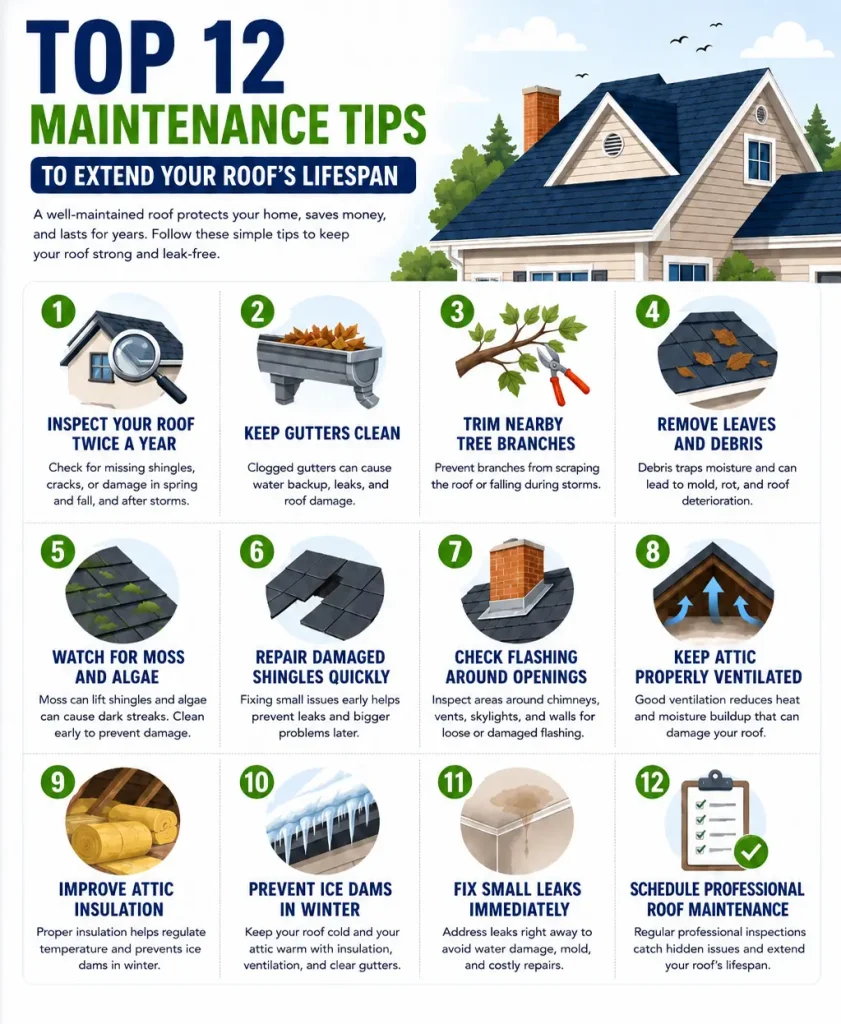
5. Watch for Moss and Algae
Moss and algae do more than make your roof look dirty. Moss can lift shingles and trap water underneath them. Algae can leave dark streaks and slowly affect your roof’s appearance and performance. This is especially common on shaded roofs or homes in humid areas. If you see green patches or black streaks, deal with them early. Do not scrape aggressively because that can damage shingles. Roof-safe cleaning treatments can help remove growth without harming the roofing system. Keeping trees trimmed and the roof clear of debris also helps prevent moss and algae from coming back.
6. Repair Damaged Shingles Quickly
One cracked or missing shingle may look small, but it can expose your roof to water. Once water gets under the surface, it can damage underlayment, decking, insulation, and ceilings. Look for shingles that are missing, curled, cracked, loose, blistered, or losing granules. Granules are important because they help protect asphalt shingles from sunlight and weather damage. If you notice many granules in your gutters, your roof may be aging or damaged. Quick shingle repair helps stop a small issue from becoming a major roof repair.
7. Check Flashing Around Roof Openings
Flashing protects the weakest areas of your roof. You will usually find it around chimneys, skylights, vents, valleys, dormers, and wall connections. These areas handle a lot of water movement, so they need to stay sealed and secure. Loose, rusted, cracked, or lifted flashing can allow water to enter even if the shingles look fine. Many leaks start around flashing because these sections are more exposed to movement and weather. During roof maintenance, look for gaps, worn sealant, rust, or damaged metal. If the flashing looks weak, have it repaired before the next heavy rain.
8. Keep Your Attic Properly Ventilated
Your attic has a direct effect on your roof’s lifespan. Poor ventilation traps heat and moisture inside the home. In hot weather, that heat can bake roofing materials from underneath. In cold weather, trapped warm air can lead to condensation and ice dam problems. Good attic ventilation allows air to move properly through intake and exhaust vents. This helps control temperature, reduce moisture, and protect the roof structure. Warning signs of poor ventilation include musty smells, mold in the attic, high indoor humidity, hot upstairs rooms, or rising energy bills. Fixing ventilation problems can improve comfort and help your roof last longer.
9. Improve Attic Insulation
Insulation and ventilation work together. If your attic insulation is weak, heat can escape into the attic during winter and create moisture problems. In colder regions, this can contribute to ice dams. During summer, poor insulation can make your cooling system work harder and increase heat stress on the roof. Proper insulation helps keep indoor temperatures stable and reduces pressure on your roofing system. It also helps prevent condensation from damaging wood, insulation, and roof decking. If your attic feels too hot, damp, or drafty, it may be time to have insulation checked.
10. Prevent Ice Dams in Winter
Ice dams form when heat from the attic melts snow on the roof. The water runs down and refreezes at the roof edge. As ice builds up, water can get trapped behind it and push under the shingles. This can lead to leaks, damaged gutters, stained ceilings, and wet insulation. To reduce ice dam risk, keep your gutters clean, improve attic insulation, and make sure your attic has proper ventilation. If heavy snow collects on your roof, use a roof rake carefully from the ground or call a professional.
11. Fix Small Leaks Immediately
A small leak is never just a small leak for long. Water spreads quietly through insulation, wood, drywall, and ceilings. By the time you see a stain inside your home, the damage may already be growing behind the surface.
Watch for these signs:
- Ceiling stains
- Damp attic insulation
- Musty smells after rain
- Peeling paint
- Mold near vents, chimneys, or walls
If you notice any of these, do not wait. Fast leak repair can save you from structural damage and expensive interior repairs.
12. Schedule Professional Roof Maintenance
Homeowners can handle basic roof care, but a professional inspection gives you a deeper look. Roofing experts know where problems usually start and can spot issues that are easy to miss from the ground. A professional can check shingles, flashing, gutters, sealants, vents, roof penetrations, attic ventilation, and signs of hidden moisture. This is especially important after a major storm or if your roof is getting older. Regular professional roof maintenance helps you plan repairs early, avoid emergency roof repair, and extend your roof’s service life.