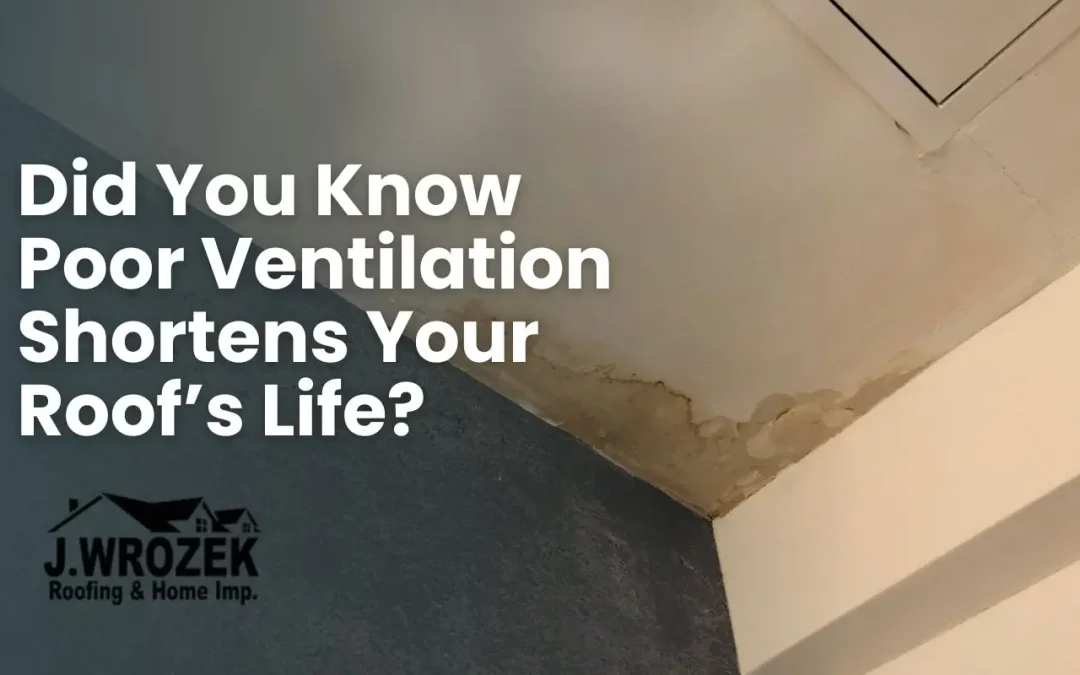
You may look at your roof from the outside and think everything is fine. The shingles may look normal, the gutters may seem clear, and there may be no visible leak inside your home. But your roof can still be under stress if the attic underneath it is not ventilating properly. Poor ventilation is one of those roofing problems you may not notice right away. It slowly traps heat and moisture inside your attic. Over time, that trapped air can damage your roof decking, weaken your Asphalt Shingles, raise your energy bills, and make your roof age faster than it should.
Your roof is not just the material you see from the street. It is a full system that includes shingles, decking, insulation, intake vents, exhaust vents, flashing, and gutters. When one part of that system fails, the rest of the roof starts working harder. That is why roofing ventilation and energy efficiency matter so much. When your attic can breathe properly, your roof stays healthier, your home feels more comfortable, and your roofing materials have a better chance of lasting longer.
Your Roof May Be Struggling Where You Cannot See It
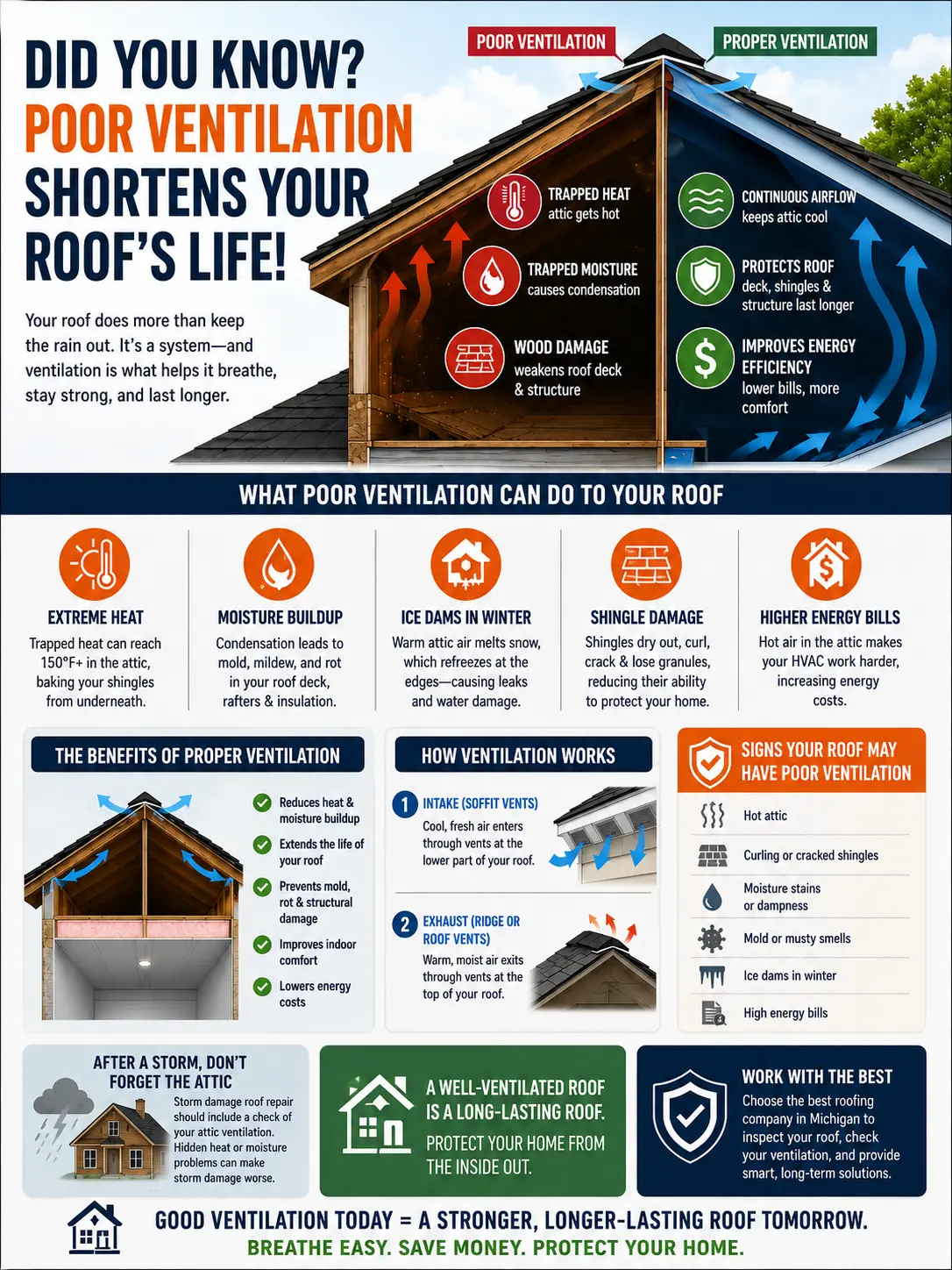
Most roof problems do not start with a dramatic leak. Many begin quietly in the attic. If warm air cannot escape, your attic becomes hotter than it should be in summer and damper than it should be in winter. You may not see the damage at first, but your roof feels the pressure every day. This matters because the underside of your roof needs protection too. When heat and moisture stay trapped, they can affect the wood, nails, insulation, and shingles above. By the time you notice curling shingles, stains on the ceiling, or a musty attic smell, the problem may already be more serious than it looks.
Heat Can Make Your Shingles Wear Out Faster
Your Asphalt Shingles are built to handle sunlight, rain, wind, and snow, but they are not meant to be overheated from underneath. When attic heat has nowhere to go, your shingles face heat from both sides. The sun hits them from above, while trapped attic heat pushes upward from below. Over time, this can dry out the shingles and make them less flexible. Once that happens, the edges may curl, granules may loosen, and cracks may begin to appear. You may think the shingles were poor quality, but the real issue could be that your attic ventilation has been working against them for years.
Moisture Can Quietly Damage the Roof Deck
Moisture is one of the biggest hidden threats to your roof. Everyday activities inside your home, such as cooking, showering, washing clothes, and heating rooms, can send warm, humid air upward. If that air reaches your attic and cannot escape, it can turn into condensation on cold surfaces. That moisture can soak into roof decking, rafters, and insulation. Over time, the wood can soften, stains can appear, and mold or mildew may begin to grow. If the roof deck becomes weak, your roof loses part of its strength, and you may eventually need more than a simple repair.
Michigan Weather Makes Ventilation Even More Important
If you live in Michigan, your roof goes through a lot. Hot summer days, freezing winter nights, snow, ice, wind, rain, and sudden weather changes all put pressure on your roofing system. If your attic ventilation is poor, these conditions can cause damage even faster. In winter, trapped attic heat can help melt snow unevenly on your roof. That water can refreeze near the edges and create ice dams. During storms, shingles already weakened by heat or moisture can lift, crack, or leak more easily. This is why storm damage roof repair should always include a closer look at the full roofing system, not just the damaged surface.
Poor Ventilation Can Raise Your Energy Bills
You may notice that your upstairs rooms feel hotter than the rest of the house, or your air conditioner seems to run longer than usual. Poor attic ventilation can be part of the reason. When hot air stays trapped above your living space, that heat can move downward and make your home harder to cool. This is where roofing ventilation and energy efficiency connect directly. A properly ventilated attic helps hot air escape, supports your insulation, and reduces pressure on your cooling system. If you are thinking about energy efficient roofing solutions, ventilation should be part of the conversation from the beginning.
Small Roofing Problems Can Become Bigger Repairs
When you see a leak, missing shingles, or storm damage, you naturally want it fixed quickly. That is the right reaction because water can damage ceilings, walls, insulation, and flooring. In serious cases, emergency roof repair may be needed to stop water from getting deeper into your home. But you should also know that a fast patch may not solve the real problem. If poor ventilation has already weakened your shingles or roof deck, another issue may show up later. A good repair should not only fix what you can see. It should also check why the problem happened in the first place.
A Proper Inspection Should Include the Attic
When a professional and local roofing company checks your home, they should not only look at the outside of the roof. Your attic can reveal important signs of hidden trouble. A professional should check for blocked vents, moisture stains, damp insulation, soft decking, mold, and poor airflow. The best roofing company in Michigan will look at your roof as a complete system. They should explain what is happening in simple terms, show you where the problem is, and recommend a solution that protects your home for the long term. You should not be left guessing why your roof keeps having problems.
For ease of mind, contact J. Wrozek Roofing & Home Imp. for proepr roof inspection and get a free estimate.
Your Roof Needs Balanced Airflow
Good ventilation is not just about adding more vents. Your roof needs the right balance between air coming in and air going out. Fresh air usually enters through intake vents near the lower part of the roof, while warm and moist air exits through vents near the top. If the intake vents are blocked or the exhaust vents are not working properly, airflow becomes weak. That means heat and moisture can stay trapped inside the attic. Balanced ventilation helps your roof breathe, keeps your attic healthier, and gives your shingles a better chance to last.
Ignoring Ventilation Can Cost You More Later
Poor ventilation may not feel urgent today, but it can become expensive over time. What begins as trapped heat can turn into curled shingles. What begins as small amounts of condensation can turn into soft decking. What begins as a warmer upstairs room can turn into higher energy bills every month. The longer the issue continues, the more damage it can cause. You may end up paying for shingle replacement, wood repair, insulation work, leak repairs, or repeated service calls. Fixing ventilation early can help you avoid larger roofing problems later.
Final Thoughts
Your roof needs more than strong shingles to last. It also needs proper airflow underneath. When your attic cannot breathe, heat and moisture begin working against your roof every day. You may not see the damage immediately, but over time it can shorten the life of your roofing system. If your shingles are curling, your attic smells musty, your energy bills are rising, or your roof seems to need repairs too often, poor ventilation may be part of the reason. Whether you need storm damage roof repair, emergency roof repair, or energy efficient roofing solutions, the smartest step is to have the full system checked. A roof that breathes properly protects your home better, lasts longer, and helps you avoid problems before they become costly.
FAQs
Can poor ventilation shorten your roof’s life?
Yes. When your attic traps heat and moisture, your shingles and roof decking work harder than they should, which can make your roof wear out sooner.
How can you tell if your roof has poor ventilation?
You may notice curling shingles, a musty attic smell, higher energy bills, moisture stains, or ice dams forming during winter.
Does roof ventilation help with energy efficiency?
Yes. When hot air can escape your attic, your home stays more comfortable and your cooling system does not have to work as hard.
Can poor ventilation lead to emergency roof repair?
Yes. If trapped moisture weakens the roof or causes leaks, you may need emergency roof repair to stop water from damaging your home.
Should ventilation be checked after storm damage?
Yes. After storm damage, your roofer should check ventilation too, because hidden heat or moisture problems can make roof damage worse.