Replacing a roof is one of the largest investments a homeowner makes, which is why many people ask a practical question before committing to a full replacement: Can you install a new roof over old shingles? The short answer is yes — but the real answer is far more nuanced. Let’s go through all the consequences whether you can install a new roof over old shingles.
While roofing over old shingles can reduce upfront costs and speed up installation, it also introduces structural, performance, and longevity risks that many homeowners only discover years later. Understanding when re-roofing is acceptable — and when it becomes a costly mistake it requires looking beyond price alone. Professional roofing decisions are rarely about convenience. They are about long-term protection, ventilation performance, and structural integrity. Safe roof safe home!
Understanding What Re-Roofing Actually Means
Re-roofing, sometimes called re roofing over existing shingles, involves installing a new layer of shingles directly on top of the existing roof instead of removing the old materials. At first glance, this approach appears attractive. There is less labor involved, less debris removal, and the project can often be completed faster. For homeowners dealing with tight budgets or urgent repairs, overlay roofing can seem like an efficient solution.
However, roofing systems are not simply cosmetic layers. Each component — decking, underlayment, flashing, ventilation, and shingles works together as a single protective system. Adding a second layer changes how that system performs. That is why experienced contractors evaluate multiple factors before recommending an overlay installation.
Can You Put New Roof Shingles Over Old Ones?
Technically, building codes in many areas allow homeowners to put new roof shingles over old ones, but only under specific conditions. The existing roof must be structurally sound. The decking beneath must show no signs of rot or moisture damage. There must only be one existing layer of shingles, since most building codes prohibit installing more than two layers due to weight concerns.
If any hidden damage exists beneath the surface, installing new shingles over the old roof simply hides the problem rather than fixing it. This is where many homeowners misunderstand the process. Re-roofing is not a shortcut replacement; it is a conditional solution appropriate only for certain roofs in certain conditions
Why Some Homeowners Choose Roofing Over Old Shingles
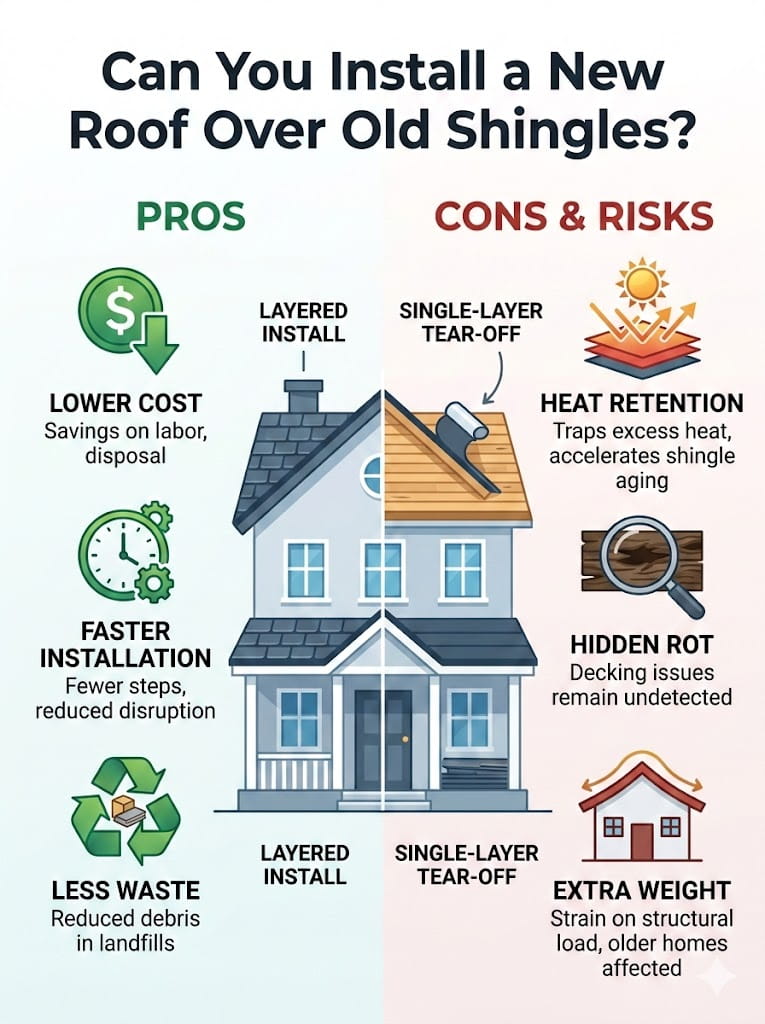
The appeal of overlay roofing comes from clear short-term advantages. These benefits explain why homeowners frequently search whether they can roof over old shingles instead of starting from scratch. Yet these advantages must be weighed carefully against long-term performance risks.
- First, eliminating tear-off labor reduces installation costs. Removing old shingles requires time, disposal fees, and additional labor. By skipping this step, contractors can lower project pricing.
- Second, installation happens faster. Without tear-off work, roofing crews move directly to installing the new surface, minimizing disruption to daily life.
- Third, re-roofing generates less construction waste, which some homeowners view as an environmentally conscious decision.
The Hidden Risks of Roofing Over Old Shingles
Overlay roofing introduces challenges that are not always visible immediately after installation. One major concern is heat retention. Multiple layers of shingles trap more heat within the roofing system, accelerating material aging. Excess heat reduces shingle lifespan and may cause premature cracking or curling.
Another issue is moisture detection. When old shingles remain in place, contractors cannot inspect the roof decking fully. Small leaks, soft wood, or hidden mold may remain unnoticed beneath the new layer. Weight is also a critical factor. Roofing materials are heavy. Adding another layer increases structural load on the home’s framing system. While most structures can handle one additional layer, older homes may experience stress over time.
The biggest risk, however, is reduced lifespan. Many overlay roofs last significantly fewer years compared to full replacements because underlying issues remain unresolved.
When Roofing Over Old Shingles Can Make Sense
Despite the risks, overlay roofing is not always a bad decision. In specific situations, it can serve as a practical interim solution. However, reputable contractors typically view overlays as a temporary strategy, not a long-term roofing investment.
Re-roofing may be reasonable when:
- The existing shingles lie flat with no curling or major damage
- Roof decking is confirmed solid through inspection
- Ventilation already functions properly
In these cases, homeowners may gain several additional years of roof life while delaying the cost of a full replacement.
Why Many Roofers Recommend Full Tear-Off Replacement
Professional roofing contractors often recommend removing existing shingles before installing a new roof, even when overlays are technically allowed. A full tear-off provides visibility. Contractors can inspect decking, repair hidden damage, upgrade underlayment systems, and improve ventilation design. These improvements dramatically increase roof durability.
Modern roofing standards emphasize system performance rather than surface appearance. Removing old materials allows installation to meet current building practices, improving energy efficiency and weather resistance. A tear-off also gives homeowners the opportunity to upgrade to better materials, such as impact-resistant shingles that offer superior protection against Michigan weather. Homeowners frequently discover that a full replacement costs more upfront but delivers lower lifetime ownership costs through fewer repairs and longer durability.
Installing a Metal Roof Over Old Shingles
One increasingly popular question involves installing a metal roof over old shingles. Metal roofing behaves differently from asphalt shingles. In many cases, contractors install metal panels over existing shingles using furring strips or structural framing that creates an air gap between layers.
This approach offers several advantages. The airspace improves ventilation, reduces heat transfer, and prevents moisture buildup beneath the metal panels. Unlike asphalt overlays, properly installed metal roofing systems can perform exceptionally well over an existing roof.
However, professional evaluation remains essential. Structural load calculations, ventilation planning, and fastening systems must be carefully engineered to avoid long-term problems. Metal roofing installations demand expertise — they are not simply another layer placed on top.
How Ventilation Changes the Decision
One factor homeowners rarely consider when asking whether they can install shingles over existing ones is ventilation. Roof ventilation controls heat and moisture inside the attic. Adding another layer of roofing changes airflow dynamics. If ventilation is already inadequate, overlay roofing can worsen attic temperatures and moisture buildup.
Poor ventilation leads to higher cooling costs, trapped humidity, and shortened roofing lifespan regardless of material quality. Many roofing professionals evaluate ventilation first before deciding whether re roofing over existing shingles is appropriate. Improving airflow often becomes more important than the roofing material itself.
Cost Savings vs Long-Term Value
The biggest motivation behind roofing over old shingles is cost reduction. Overlay installations may save several thousand dollars initially, which makes them attractive for homeowners planning to sell or managing short-term budgets. Yet roofing should be evaluated as a long-term asset rather than a short-term expense.
A full replacement may last 25 to 30 years. An overlay installation may last significantly less depending on underlying conditions. When future tear-off costs, repairs, and reduced lifespan are considered, the financial advantage of re-roofing often narrows. For a complete picture of what replacement involves, see our guide to roof replacement cost. The decision ultimately depends on homeowner goals: immediate savings or long-term performance.
Situations Where You Should Never Roof Over Old Shingles
There are clear scenarios where overlay roofing should be avoided entirely. Roofs with multiple existing layers cannot safely support additional materials. Signs of sagging, trapped moisture, or widespread shingle damage indicate structural problems beneath the surface.
Insurance providers may also limit coverage for overlay roofs because hidden damage risks increase claim uncertainty. If leaks already exist, installing new shingles over old ones almost always leads to recurring problems rather than solutions.
The Importance of Professional Inspection
Before deciding whether you can roof over old shingles, a professional inspection is essential. Experienced contractors examine decking strength, ventilation balance, flashing conditions, and moisture levels. This evaluation determines whether an overlay installation is safe or whether a full replacement will better protect the home.
Homeowners who skip inspection often choose overlay roofing based solely on price, only to face costly repairs later. Expert guidance transforms roofing decisions from guesswork into informed investment planning.
Final Thoughts
So, can you put new roof shingles over old ones? Yes — but only under the right conditions. Overlay roofing offers speed and lower upfront cost, yet it carries trade-offs involving lifespan, structural performance, and future maintenance. In many cases, removing old materials provides greater long-term value, better energy performance, and stronger protection against weather damage.
For homeowners considering roofing over old shingles, the smartest approach is not asking whether it is possible but whether it is truly beneficial for the home’s future. A roof is more than a surface covering. It is a complete protection system designed to manage water, heat, airflow, and structural stress. Decisions made during replacement influence comfort, efficiency, and property value for decades. Choosing wisely today ensures the roof above your home performs reliably long after installation day ends.
Not sure whether overlay or tear-off is right for your roof? Contact J. Wrozek Roofing for a professional evaluation.
In A Glance:
Can you roof over old shingles instead of removing them?
Yes — in many cases you can install new shingles over an existing roof, provided the current layer is in good structural condition. Local building codes typically allow only one additional layer, and the roof deck must be solid, dry, and free of hidden damage.
Can you put new roof shingles over old ones safely?
It can be safe when done under the right conditions:
- Existing shingles are lying flat without major curling or cracking
- There is no trapped moisture or mold beneath the roof
- Proper ventilation and flashing upgrades are included
If these conditions are not met, problems may develop faster than expected.
When is roofing over old shingles a bad idea?
Re-roofing over existing shingles is risky if:
- The roof already has multiple layers
- Storm damage or leaks are present
- The decking underneath may be rotting
- Ventilation problems exist in the attic
In these situations, a complete tear-off is almost always the better investment.
Is installing a metal roof over old shingles a good option?
A metal roof over old shingles can work well when installed with proper framing or furring strips. This method:
- Creates an air gap that improves ventilation
- Reduces landfill waste from tear-offs
- Adds durability and long service life
However, professional evaluation is essential to ensure structural load limits are not exceeded.
Does roofing over old shingles save money?
Yes, upfront costs are usually lower because labor and disposal expenses decrease. Homeowners often save 15–25% compared to a full replacement. But savings can disappear later if hidden problems require early repairs or premature replacement.
Will a roof installed over old shingles last as long?
Typically, no. A layered roof may have a shorter lifespan because:
- Heat becomes trapped between layers
- Shingles may not seal perfectly
- Underlying damage cannot be inspected fully
Many contractors estimate slightly reduced longevity compared to a full tear-off installation.
Does re-roofing over existing shingles affect home value?
It can. While some buyers appreciate a newer roof appearance, inspectors and homebuyers often prefer a full replacement because it allows confirmation of structural integrity.
Documentation from a professional roofing contractor helps maintain buyer confidence.
Can roofing over old shingles cause ventilation problems?
Yes — and this is one of the most overlooked risks.
Adding another layer can increase attic heat retention and moisture buildup if ventilation is not upgraded during installation. Proper airflow planning is critical to prevent mold growth and energy inefficiency.
Will insurance companies cover a roof installed over old shingles?
Coverage policies vary. Some insurers:
- Require disclosure of layered roofing systems
- Limit coverage lifespan expectations
- Prefer single-layer roofs for risk assessment
Homeowners should confirm insurance requirements before proceeding.
How do professionals decide whether re-roofing is possible?
Experienced contractors evaluate:
- Decking strength and moisture levels
- Flashing condition around chimneys and valleys
- Roof weight capacity
- Existing shingle thickness and wear patterns
A thorough inspection determines whether roofing over old shingles is a practical solution or a temporary shortcut.
What is the biggest risk of roofing over old shingles?
The greatest risk is hidden damage. Without removing the original layer, issues such as rot, leaks, or structural deterioration may remain undetected until costly repairs become unavoidable.