When homeowners think about roof damage, they usually look at the shingles first. Missing, cracked, curled, or lifted shingles are easy to notice from the ground. But many roofing problems actually begin inside the attic, long before they show up on the outside of the home. Your attic plays a major role in the health of your roof. Poor ventilation, trapped moisture, hidden leaks, and mold growth can slowly damage the roof from underneath. Over time, these issues can lead to weakened decking, insulation problems, musty odors, and damaged roof shingles.
Why the Attic Matters More Than You Think
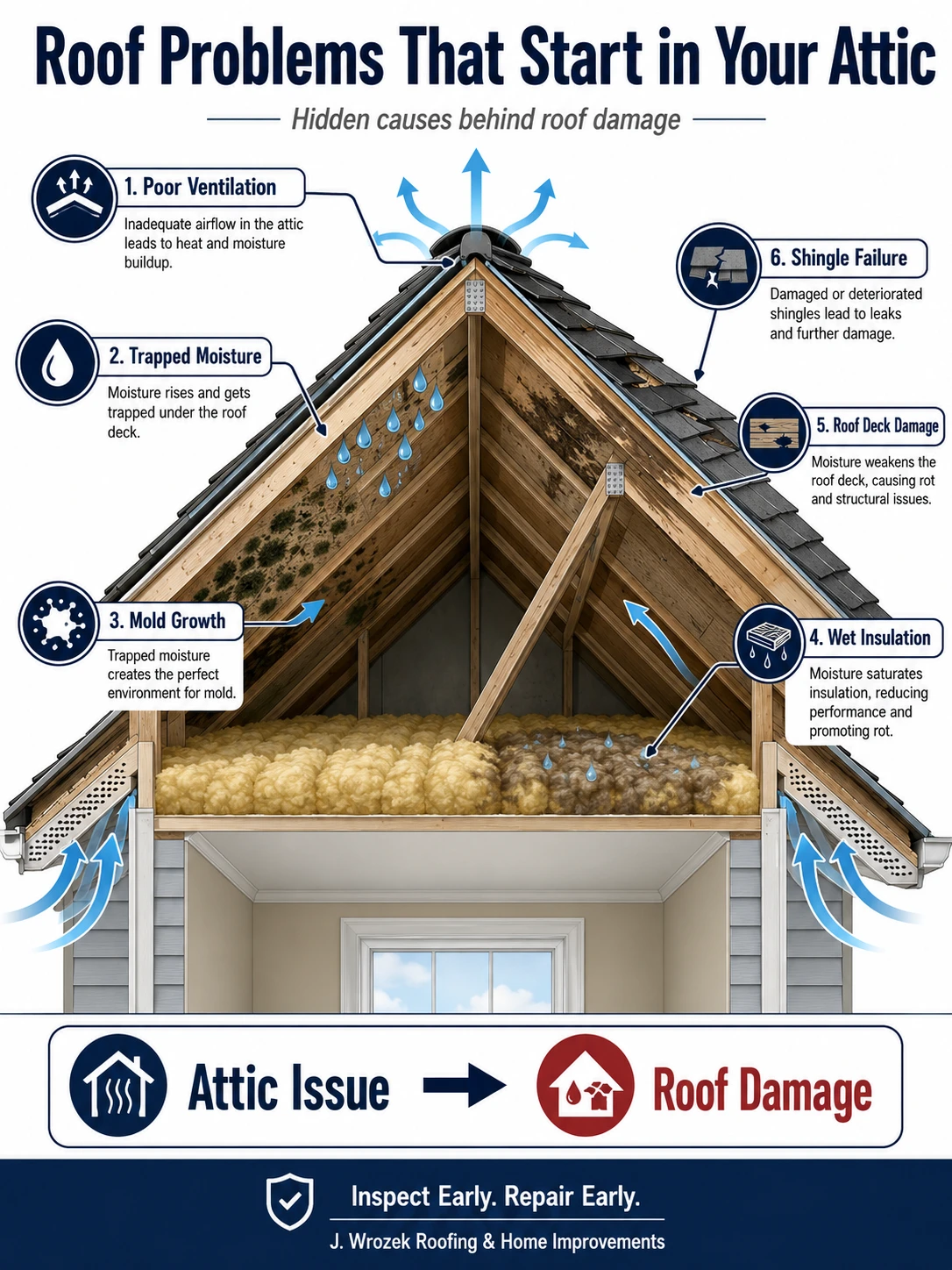
A roof is not only a layer of shingles. It is a full system that includes ventilation, insulation, decking, flashing, and attic airflow. If the attic is too hot, too humid, or poorly ventilated, the roof above it can suffer. Warm air from inside the home can rise into the attic. When that air meets a cold roof deck, condensation can form. If the moisture has nowhere to escape, it can lead to mold, wood damage, and roofing problems that become expensive over time.
How Does Mold Get in Your Attic?
A common question homeowners ask is, how does mold get in your attic? Mold grows when moisture is present. That moisture may come from roof leaks, blocked vents, bathroom fans releasing air into the attic, poor insulation, or weak attic ventilation. Once moisture stays in the attic, mold can grow on wood, insulation, and dusty surfaces. It may show up as dark stains, black spots, or a musty smell. If you only clean the mold but do not fix the moisture source, the problem will likely return.
The Link Between Attic Mold and Damaged Roof Shingles
Attic mold is often a sign that moisture is trapped under the roof deck. That moisture can weaken the wood that supports your roofing materials. When the roof deck becomes damp or unstable, shingles may not perform the way they should. This is why damaged roof shingles are sometimes only a symptom of a deeper issue. If the attic has moisture problems, replacing a few shingles may not be enough. The roof and attic should be checked together to find the real cause.
Warning Signs Your Attic May Be Hurting Your Roof
Your attic can reveal roof trouble before water stains appear on your ceiling. Homeowners should look for simple signs that something may be wrong. Common warning signs include musty attic odors, dark stains on roof decking, damp or flattened insulation, rusty roofing nails, visible mold patches, frost under the roof deck in winter, water stains near vents or chimneys, curling or cracked shingles outside, uneven roof areas, and recurring leaks after rain or snow.
- Musty odors coming from the attic
- Dark stains or mold patches on roof decking
- Damp, wet, or flattened insulation
- Rusty roofing nails or metal fasteners
- Water stains near vents, chimneys, or roof openings
- Curling, cracked, or damaged roof shingles
If you notice any of these signs, it is better to schedule a roof inspection before the damage spreads. Small attic issues can turn into larger roof repairs when moisture continues to build.
How Do You Get Rid of Mold in Your Attic?
If you are wondering how do you get rid of mold in your attic, the first step is finding the moisture source. Mold removal alone is not enough. You need to know whether the problem is coming from a roof leak, poor airflow, blocked vents, or indoor humidity. Getting rid of mold in your attic may involve cleaning affected surfaces, replacing damaged insulation, improving ventilation, and repairing roof leaks. If mold covers a large area or keeps coming back, professional help is the safer option.
Why Roof Leaks Often Start Small
Many roof leaks begin quietly in the attic. Water may enter around vents, flashing, chimneys, valleys, skylights, or damaged roof shingles. It may soak into insulation or wood before it ever reaches your ceiling. By the time you see a ceiling stain, the attic may already have moisture damage. That is why early inspections matter. A small leak is usually easier and less costly to fix than a roof system that has been wet for months.
Protect Your Roof From the Inside Out
If your attic smells musty, your insulation looks damp, or your shingles are showing signs of wear, do not wait for the problem to get worse. J. Wrozek Roofing & Home Improvements can inspect your roof, check for hidden attic issues, and recommend the right repair solution. Your roof protects your whole home, and your attic plays a big part in that protection. Contact J. Wrozek Roofing & Home Improvements today to schedule a roof inspection and protect your home from hidden damage.
Final Thoughts
Not every roof problem starts on the outside. Mold, moisture, poor ventilation, and hidden leaks can begin inside the attic and slowly damage the roof from underneath. Understanding how does mold get in your attic, what causes damaged roof shingles, and what goes into getting rid of mold in your attic can help you act before the problem becomes expensive. A healthy attic helps support a healthier, longer-lasting roof.
FAQs
1. How does mold get in your attic?
Mold gets in your attic when moisture is present. This can happen because of roof leaks, poor ventilation, bathroom fans, blocked vents, or condensation.
2. How do you get rid of mold in your attic?
You need to fix the moisture source first. Then the affected area can be cleaned, dried, treated, or repaired depending on how serious the mold problem is.
3. Can damaged roof shingles cause attic mold?
Yes. Damaged roof shingles can allow water to enter the roof system, which may lead to attic moisture and mold growth.
4. Is attic mold always from a roof leak?
No. Attic mold can also come from poor ventilation, indoor humidity, blocked vents, or bathroom fans releasing moist air into the attic.
5. Can attic mold damage the roof?
Yes. Moisture linked to attic mold can weaken roof decking, insulation, and wood framing if it is ignored.
6. When should I call a roofing contractor?
Call a roofing contractor if you notice mold, musty smells, damp insulation, leaks, or damaged roof shingles. Early inspection can help prevent costly repairs.