
The booklet came with the house. Somewhere between the appliance manuals and the HVAC filter schedule, there’s a folded packet from the roofing company. On the front it says “Limited Lifetime Warranty” in bold letters. Inside, it says a lot more—in smaller print, across several pages, with phrases like “prorated coverage” and “exclusions for improper ventilation.”
Most homeowners never read past the cover. The warranty exists, it’s in the drawer, and that feels like enough.
Until the roof fails.
Then the questions start. What does “limited” mean? What’s actually covered? Why is the claim being denied when the warranty says 30 years and the roof is only 12 years old? These are the questions we hear regularly—from homeowners who thought they were protected and discovered, too late, that the protection had limits they didn’t understand.
This guide is the plain English version of your roof warranty. We’ll explain what the two types of warranties actually cover, what voids them, what “lifetime” really means, and how to use your warranty if you ever need to. By the end, you’ll understand what you have—and what you don’t.
Two Types of Roof Warranty — And Why Both Matter
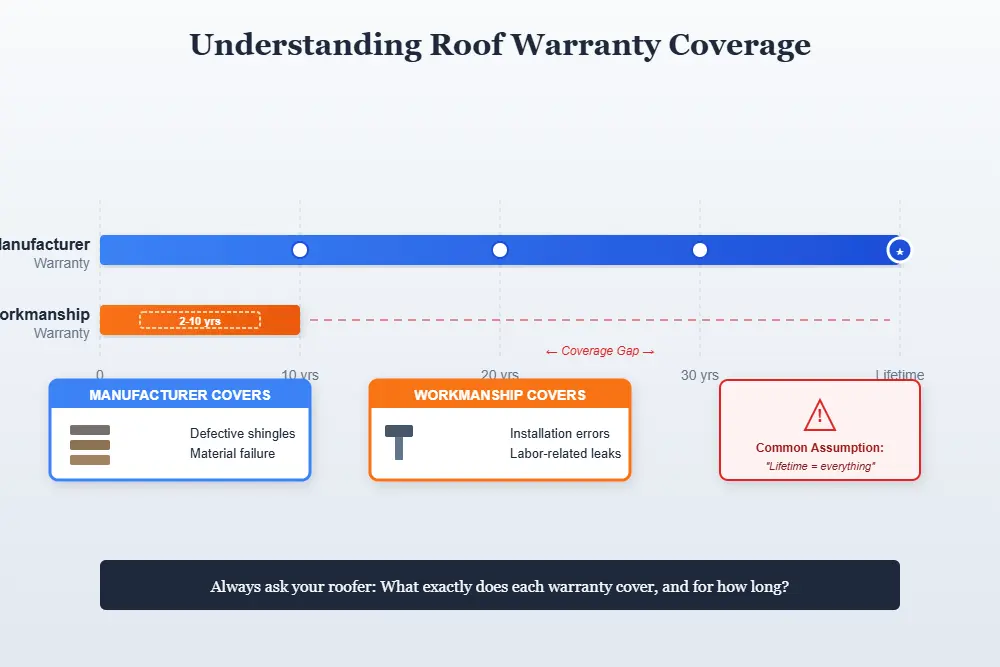
Every roof replacement comes with two separate warranties. They cover different things, from different parties, for different lengths of time. Confusing them is how homeowners end up surprised.
The manufacturer warranty covers the materials—the shingles themselves, and sometimes the underlayment and accessories. If the shingles crack, curl, or fail prematurely due to a manufacturing defect, the manufacturer is responsible. This warranty comes from the company that made the shingles: GAF, Owens Corning, CertainTeed, Atlas, or whoever produced the product on your roof.
The workmanship warranty covers the installation. If the roof leaks because the flashing was installed wrong, the shingles weren’t nailed properly, or the starter course was skipped—that’s an installation error, not a material defect. The contractor who did the work is responsible. This warranty comes from the roofing company, not the manufacturer.
Here’s why the distinction matters: a manufacturer won’t cover problems caused by bad installation. And a contractor’s workmanship warranty won’t help you if the shingles themselves are defective. You need both warranties intact to be fully protected.
When you get a new roof, make sure you receive documentation for both. A manufacturer registration card or certificate. A written workmanship guarantee from your contractor with specific terms. If either is missing, ask for it before the crew leaves your property.
What Manufacturer Warranties Cover
Manufacturer warranties protect against defects in the shingles themselves. If the asphalt cracks prematurely, if granules fall off faster than they should, if the shingle fails to perform as designed—that’s a manufacturing defect.
Coverage typically includes replacement materials for the defective shingles. Some warranties also include labor costs for the replacement; others don’t. The difference matters significantly when you file a claim—a “materials only” warranty means you’re paying a contractor to do the work even if the manufacturer covers the shingles.
What manufacturer warranties don’t cover:
Damage from weather events—hail, wind, fallen trees—is not a manufacturing defect. That’s an insurance claim, not a warranty claim. The shingles performed as designed; they just met forces beyond their rating.
Normal wear and aging is not covered. Shingles deteriorate over time. Granule loss, minor curling, and color fading after 20 years aren’t defects—they’re the end of the product’s service life.
Problems caused by improper installation aren’t covered by the manufacturer. If the shingles failed because they were nailed in the wrong spot or installed over inadequate ventilation, that’s on the installer, not the shingle maker.
Damage from foot traffic, antenna installation, satellite dishes, or other post-installation activity voids most warranties. Once someone other than the original installer modifies the roof, the manufacturer’s responsibility typically ends.
What Workmanship Warranties Cover
Workmanship warranties cover errors made during installation. This is the contractor’s guarantee that they did the job right.
If the roof leaks within the warranty period due to improper flashing, incorrect nail placement, missed sealant, or any other installation mistake—the contractor fixes it at no cost. That’s the deal.
Workmanship warranty terms vary widely. Some contractors offer 2 years. Some offer 5. Some offer 10 or more. The length of coverage matters, but so does the contractor’s ability to honor it. A 10-year warranty from a company that goes out of business in year 3 is worthless. A 5-year warranty from a company that’s been in your community for 30 years is real protection.
What workmanship warranties don’t cover:
Material defects. If the shingles themselves are faulty, that’s the manufacturer’s problem, not the installer’s.
Damage you cause. If you or another contractor walks on the roof and cracks shingles, that’s not the original installer’s responsibility.
Problems caused by neglected maintenance. Clogged gutters that cause water backup, debris left to rot on the roof surface, or tree branches allowed to scrape against shingles—these create damage the installer isn’t responsible for.
The best workmanship warranties come with specifics: what’s covered, what’s not, how long, and how to file a claim. Vague promises don’t protect you. Written terms do.
Prorated vs Non-Prorated Coverage
This is where “30-year warranty” stops meaning what you think it means.
A non-prorated warranty covers the full cost of replacement materials for a set period—typically 10 to 15 years, sometimes 20. During this window, if the shingles fail due to a covered defect, you get full replacement value. Year 1 or year 9, the coverage is the same.
A prorated warranty reduces coverage over time. After the non-prorated period ends, the manufacturer pays a decreasing percentage of replacement costs. By year 25 of a “30-year warranty,” you might be responsible for 80% of the cost. By year 28, maybe 90%. The warranty technically exists, but its value has nearly evaporated.
Here’s what this looks like in practice:
“Years 1-10: Full replacement value. Years 11-20: Coverage decreases by 5% per year. Years 21-30: Coverage decreases by 10% per year.”
Under those terms, a shingle failure in year 22 means the manufacturer covers maybe 30% of replacement materials. You cover the rest—plus labor if labor isn’t included.
This doesn’t make the warranty worthless. Early-life protection against defects is valuable. But it means “30-year warranty” is not a promise that your roof will last 30 years, or that you’re fully protected for 30 years. It’s a specific schedule of declining coverage that you need to understand before you rely on it.
When comparing roofing options, ask about the non-prorated period. A warranty with 15 years of full coverage and 15 years of prorated coverage protects you better than one with 5 years full and 25 years prorated—even if both say “30 years” on the cover. Understanding how this fits into the overall cost of a roof replacement helps you evaluate what you’re really getting.
What Voids Your Roof Warranty
Warranties come with conditions. Violate them—even unknowingly—and your coverage disappears. These are the most common warranty voiders.
Improper ventilation. Shingles are designed for roofs with adequate airflow. If your attic doesn’t have enough intake and exhaust ventilation, heat and moisture build up under the shingles. They age faster. They curl. They fail early. And when you file a claim, the manufacturer’s inspector notes the ventilation problem and denies coverage. This is one of the most common reasons warranty claims get rejected.
Unauthorized repairs. If someone other than the original installer—or a manufacturer-authorized contractor—makes repairs to your roof, many warranties become void. That includes the handyman who patched a leak, the satellite installer who lifted shingles, and the HVAC company that cut a new vent hole. Once unauthorized hands touch the roof, the warranty may be gone.
Improper installation of other components. Skylights, solar panels, antennas, and other additions must be installed correctly or they can void your warranty. Penetrations that aren’t properly flashed, panels mounted without following manufacturer guidelines, equipment that damages shingles during installation—all warranty voiders.
Neglected maintenance. Warranties assume you’re taking reasonable care of your roof. That means keeping gutters clear, removing debris, trimming overhanging branches, and addressing minor issues before they become major damage. A warranty isn’t a substitute for maintenance—it’s protection that requires maintenance to stay valid.
Pressure washing. This one surprises people. Pressure washing a roof to remove moss or algae can strip granules and damage shingles. Many manufacturers explicitly void warranties if the roof has been pressure washed. If you need to clean your roof, use manufacturer-approved methods.
Read your warranty documents. The voiding conditions are listed—sometimes in the middle of dense paragraphs, but they’re there. Know what you can’t do before you do it.
Transferring Your Warranty When You Sell
If you sell your house, can the new owner use your roof warranty? Sometimes.
Many manufacturer warranties are transferable, but there are conditions. You typically need to notify the manufacturer within a set window—often 30 to 60 days after the sale. There may be a transfer fee. And coverage for the new owner is often reduced: the same warranty that gave you 50 years might give the second owner only 25, or convert from non-prorated to prorated.
Workmanship warranties are trickier. Some contractors offer transferable workmanship guarantees; others don’t. If the warranty is tied to the original homeowner, it ends when you sell. Ask your contractor about transferability before installation—especially if you might sell the house before the warranty period ends.
When you’re buying a house with a newer roof, ask for the warranty documentation. Confirm the warranty is still valid and whether it was properly transferred. A roof that’s “still under warranty” on paper might not actually be covered if the transfer process wasn’t followed.
And when you’re selling, transferring the warranty adds value. A buyer who knows they’re getting a roof with remaining warranty protection has one less thing to worry about. It’s a selling point worth documenting.
How to File a Roof Warranty Claim
If you think you have a warranty issue, here’s how to handle it.
First, identify whether it’s a material problem or a workmanship problem. Is the shingle itself failing—cracking, losing granules prematurely, curling within a few years of installation? That’s likely a manufacturer warranty claim. Is the roof leaking because of how it was installed—bad flashing, improper nailing, missed sealant? That’s a workmanship claim against the contractor.
For manufacturer claims, start by finding your warranty documentation. You’ll need the product name, the installation date, and ideally the warranty registration number. Contact the manufacturer’s warranty department—the number is usually on the warranty certificate or on the manufacturer’s website. They’ll tell you what documentation they need and may send an inspector to evaluate the roof.
Take photos before filing. Document the problem from multiple angles, including close-ups and wider shots showing the affected area in context. Note when you first noticed the issue. This documentation supports your claim and protects you if there’s a dispute.
For workmanship claims, contact the contractor directly. If they’re still in business, a reputable company will send someone to inspect the issue and make it right. This is where choosing a contractor with staying power matters—a company that’s been around for decades is more likely to honor a 10-year warranty than a company that formed last year.
Be prepared for inspection. Both manufacturer and contractor claims typically involve someone coming to look at the roof. They’ll assess whether the problem is actually covered. If ventilation is inadequate, if there’s evidence of foot traffic damage, if maintenance was neglected—these findings can result in a denied claim.
If a claim is denied and you believe it shouldn’t be, ask for the denial in writing with specific reasons. Sometimes claims are denied incorrectly, and having the reasoning documented gives you grounds to appeal or escalate.
One more note: warranty claims only help if the problem is covered. If your roof is damaged by a storm, that’s not a warranty issue—it’s an insurance issue. If you’re trying to decide whether to repair or replace after damage, the answer depends on the cause, not just the coverage.
Frequently Asked Questions
What does a “30-year warranty” actually mean?
It means the manufacturer offers some level of coverage for 30 years—but not full coverage for all 30. Most warranties have a non-prorated period (full coverage) and a prorated period (declining coverage). By year 25, you might only be covered for 20-30% of replacement materials. Read the specific terms to understand what you’re getting.
What’s the difference between a lifetime warranty and a 30-year warranty?
Mostly marketing. “Lifetime” typically means the expected lifetime of the original owner’s residence in the home—not forever. Coverage terms, prorating schedules, and exclusions are often similar between “lifetime” and “30-year” products. The word “lifetime” sounds better, but the actual protection depends on the fine print, not the label.
Does my warranty cover storm damage?
No. Warranties cover manufacturing defects and installation errors. Storm damage—hail, wind, fallen trees—is covered by your homeowner’s insurance, not your roof warranty. If a storm damages your roof, file an insurance claim, not a warranty claim.
Can I do my own roof repairs without voiding the warranty?
Usually not. Most manufacturer warranties require repairs to be done by certified or authorized contractors. DIY repairs, or repairs by unlicensed contractors, can void your coverage. Before touching your roof yourself, check your warranty terms.
Are extended warranties worth buying?
It depends on what they cover. Some extended warranties add labor coverage to a materials-only manufacturer warranty—that’s valuable. Others extend prorated coverage for additional years—less valuable. Read the terms carefully. An extended warranty that costs $500 but only adds prorated coverage for years 26-30 probably isn’t worth it. One that adds 10 years of labor coverage might be.
What should I look for when reading warranty fine print?
Focus on: length of non-prorated period, what’s covered vs excluded, whether labor is included, ventilation requirements, transferability conditions, and what actions void the warranty. The headline number (30 years, lifetime) matters less than these details. A warranty with 15 years of full coverage and labor included is often better than one advertising “50 years” with only 5 years non-prorated and no labor.
A roof warranty is protection—but only if you understand what it protects. The fine print matters. The distinction between manufacturer and workmanship coverage matters. The prorating schedule matters. Now you know what questions to ask and what answers to look for. That’s the difference between a warranty that helps you and one that sits in a drawer until it’s too late.