
Replacing a roof in Michigan is not simply a home improvement project — it is a strategic decision influenced by climate, cost trends, contractor availability, and long-term energy performance. Michigan homeowners face unique roofing challenges, including heavy snowfall, lake-effect storms, fluctuating temperatures, and seasonal weather extremes. Understanding when to replace your roof can significantly impact installation quality, project cost, and the lifespan of your roofing system.
Whether you are planning preventative maintenance or timing a replacement project, scheduling correctly can save thousands of dollars and prevent future damage.
Michigan Climate: Why Timing Matters for Roof Replacement
Michigan sits within cold climate zones 5 through 7, meaning roofs must withstand snow loads, freezing temperatures, windstorms, and summer heat cycles. These environmental conditions directly influence roofing installation success.
Roofing materials — particularly asphalt shingles — rely on proper temperature ranges to seal and bond correctly. Installing a roof during unfavorable weather can reduce durability and lead to premature repairs.
Professional contractors typically plan installations around weather stability rather than homeowner convenience alone.
Key environmental factors include:
- Freeze–thaw cycles causing shingle expansion
- Ice dams during winter
- High winds and storm exposure
- Humidity variations affecting underlayment performance
Because Michigan weather is unpredictable, choosing the right season becomes one of the most important decisions in any roofing project.
Fall: The Best Time of Year to Replace a Roof in Michigan
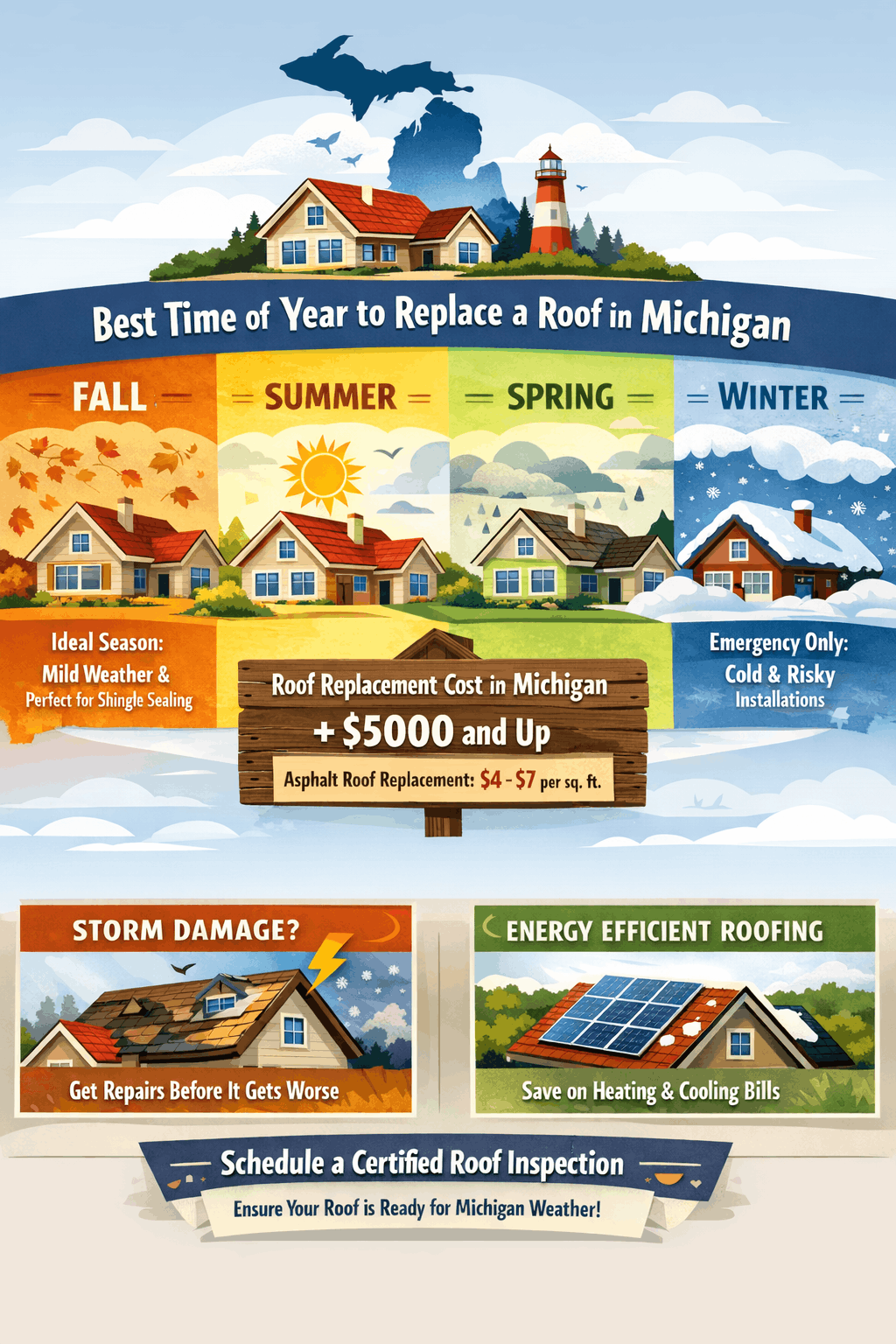
For most homeowners, early fall through mid-fall is widely considered the ideal season for roof replacement.
Why Fall Works Best
During September and October, Michigan typically experiences:
- Moderate temperatures
- Lower humidity
- Reduced rainfall compared to spring
- Stable daytime warmth for proper shingle sealing
Asphalt shingles activate their adhesive strip best in warm but not hot conditions, allowing them to bond securely before winter arrives. Fall installations prepare homes for snow accumulation and prevent winter leaks — a major advantage in northern climates. Many roofing professionals prioritize fall scheduling because it provides optimal working conditions and long-term performance reliability. However, fall is also peak season. Homeowners should schedule inspections early to avoid long contractor waitlists.
Summer Roofing in Michigan: Reliable but Competitive
Summer remains one of the busiest seasons for roofing services in Michigan. Long daylight hours allow crews to complete projects efficiently, and dry weather reduces installation delays. Homeowners often choose summer when planning renovations or preparing homes for sale.
Advantages of Summer Installation
- Fast project completion
- Consistent weather windows
- Easier material handling
- Minimal risk of freezing conditions
The downside is demand. Because summer is peak roofing season, pricing may be slightly higher due to contractor availability and labor demand. Scheduling early ensures better timelines and pricing stability.
Spring Roof Replacement: Smart but Weather-Dependent
Spring can be an excellent time for roof replacement — especially after winter damage becomes visible. Michigan winters frequently cause hidden problems such as:
- Shingle lifting
- Ice dam deterioration
- Flashing separation
- Storm damage requiring attention
Scheduling a professional inspection during spring helps identify issues early before leaks worsen. Replacing a roof during spring allows homeowners to correct problems before summer storms arrive.
Spring Considerations
While spring offers moderate temperatures, rainstorms can delay projects. Flexible scheduling is important, and experienced contractors plan installations around weather forecasts. Many homeowners replace roofs in spring after insurance claims following winter or storm damage. Spring replacement projects are common following insurance claims related to wind or hail damage. While weather can occasionally delay installations due to rain, experienced contractors schedule projects strategically around forecasts.
Winter Roof Replacement: Emergency Situations Only
Winter roofing in Michigan is generally avoided unless necessary. Cold temperatures prevent shingles from sealing properly. Contractors may need specialized techniques such as manual sealing or warming equipment, which increases labor time and cost.
Winter replacements are typically recommended only when:
- Structural damage occurs
- Severe leaks develop
- Storm damage cannot wait until spring
Instead, winter is often the best time to schedule inspections and secure quotes before peak season arrives. For most homeowners, winter serves as the planning phase rather than the installation season. Scheduling inspections and gathering estimates during colder months positions homeowners ahead of the spring rush.
How Season Affects Replacement Cost
Timing influences pricing. Fall and summer — peak seasons — often carry higher labor costs due to demand. Late winter and early spring may offer better availability and pricing flexibility.
For a full breakdown of what Michigan homeowners should expect to pay, including material comparisons and regional factors, see our roof replacement cost guide.
The Role of Professional Inspections in Timing
Before deciding when to replace your roof, a professional inspection helps establish the timeline. Insurance providers often require documentation following storms. An inspection not only verifies damage but also strengthens insurance claims, potentially reducing out-of-pocket expenses.
An inspection evaluates:
- Hidden moisture damage
- Structural integrity
- Ventilation efficiency
- Flashing and seal condition
- Storm impact evidence
Certified inspections are particularly important for insurance claims. If damage resulted from hail or high winds, insurance policies may cover part or even all replacement costs.
Early inspections also prevent emergency replacements during winter — the most expensive scenario.
When Storm Damage Affects Your Timeline
Jackson experiences strong storms, hail events, and heavy snowfall that can force unplanned replacement timelines. When storm damage is extensive — multiple leaks, compromised decking, or granule loss across large areas — waiting for ideal seasonal conditions may not be an option. In these cases, working with experienced contractors who can install properly even in challenging weather becomes critical.
Energy Efficient Roofing Solutions for Michigan Homes
Modern homeowners are increasingly investing in energy efficient roofing solutions rather than simple replacements.
Energy-efficient roofing improves:
- Indoor temperature regulation
- Heating efficiency during winter
- Cooling costs during summer
- Overall home resale value
Popular efficiency upgrades include:
- Reflective architectural shingles
- Proper attic ventilation systems
- Ice and water shield membranes
- Improved insulation layers
Michigan building standards also emphasize insulation performance because roofing plays a major role in heat retention during cold months. Energy-efficient roofing not only protects the home but reduces long-term utility expenses — a growing priority among homeowners.
Why Contractor Selection Matters for Timing
Experienced contractors understand how Michigan’s seasonal patterns affect installation quality. They schedule projects around weather windows, use temperature-appropriate techniques, and plan lead times realistically. Homeowners should seek contractors who provide clear timelines, explain seasonal considerations, and have documented experience with Michigan’s climate challenges.
Planning Ahead: Lead Times by Season
Roof replacement requires advance planning. Michigan’s climate accelerates wear, meaning some roofs need replacement earlier than expected. Rather than reacting to emergencies, proactive scheduling allows homeowners to book during favorable seasons.
Typical lead times:
- Fall (peak season): 4–6 weeks out
- Summer: 3–5 weeks out
- Spring: 2–4 weeks out
- Winter: Often immediate availability, but weather-dependent
Homeowners in Jackson County should also factor in permit requirements, which can add processing time depending on the scope of work.
Strategic Timing Tips to Save Money
Homeowners looking to optimize value should consider strategic scheduling:
Late Winter Planning:
Request inspections and quotes before the spring rush.
Early Fall Installation:
Achieve ideal weather conditions and long-term durability.
Insurance Timing:
Document storm damage immediately to maximize coverage eligibility.
Planning one season ahead allows better contractor availability and reduces stress.
Final Thoughts: The Smartest Time to Replace a Roof in Michigan
The best time of year to replace a roof in Michigan is ultimately determined by preparation. Fall provides the most favorable installation environment, summer offers efficiency, and spring serves as the critical inspection season that reveals hidden damage.
A roof replacement is one of the most significant upgrades a homeowner will undertake. When scheduled thoughtfully and completed by experienced professionals, it enhances structural protection, improves energy performance, and increases property value for years to come. Jackson County homeowners who plan ahead — rather than wait for failure — consistently achieve the best results.
Ready to schedule your replacement during the right season? Contact J. Wrozek Roofing to discuss timing and next steps.